Best Privacy Coins to Watch in 2026

On this page
- •Privacy tokens use techniques like ring signatures, zk-proofs, and mixnets to hide transaction data, balances, or network metadata.
- •The privacy narrative is gaining attention again as regulations increase and users look for more control over financial visibility.
- •This sector ranges from default-private payment coins to networks offering confidential smart contracts and privacy infrastructure.
Privacy coins, also known as Anonymity Enhanced Coins (AECs), are digital assets built to protect user identities and transaction details. Unlike traditional blockchains where activity can be traced through public ledgers, these networks use advanced cryptographic methods to hide addresses, balances, or metadata. In this guide, we’ll walk through the 12 best privacy coins and explore how each project approaches confidentiality, security, and real-world use cases.
Top Privacy Coins to Look Out For
When someone searches for the top privacy coins, there is often a lot of technical detail to sort through. Blockchain privacy relies on advanced cryptography, and many of these concepts are easier to understand for developers or experienced users. That can make it difficult for everyday readers or new investors to separate the important points from the technical noise.
Our goal with this guide is to keep things clear and practical. Instead of going deep into complex formulas or protocol-level theory, we focus on the core idea behind each project, how it approaches privacy, and why it matters in the current market.
If you want to study a specific project in more detail, this list gives you a starting point. And if you’re simply looking for privacy-focused cryptocurrencies to keep on your radar, the table below provides a straightforward overview of the top privacy tokens to look for.
| Coin | Ticker | Core Privacy Technology | Market Cap |
|---|---|---|---|
| Monero | XMR | Ring signatures, stealth addresses, RingCT | $9.6B+ |
| Zcash | ZEC | zk-SNARKs | $18.9B+ |
| Zano | ZANO | d/v-CLSAG ring signatures, stealth addresses | $96.1M+ |
| Firo | FIRO | Lelantus Spark | $13.7M+ |
1. Monero – $XMR
Monero (XMR) is a decentralized cryptocurrency built with privacy as its core function. Launched in 2014, it uses the CryptoNote protocol to make transactions untraceable by default. Unlike transparent blockchains, Monero hides the sender, receiver, and transaction amount using ring signatures, stealth addresses, and Ring Confidential Transactions (RingCT).

The network runs on a proof-of-work model with the RandomX algorithm, designed to stay ASIC-resistant and accessible to regular CPU miners. With no pre-mine or central authority, Monero is maintained by a global, community-driven development process.
2. Zcash – $ZEC
Zcash (ZEC) is a decentralized cryptocurrency launched in 2016 as a privacy-focused fork of Bitcoin. It was designed to keep the core properties of a fixed-supply digital asset while introducing optional transaction privacy. Unlike fully transparent blockchains, Zcash allows users to choose between public transfers and shielded transactions.
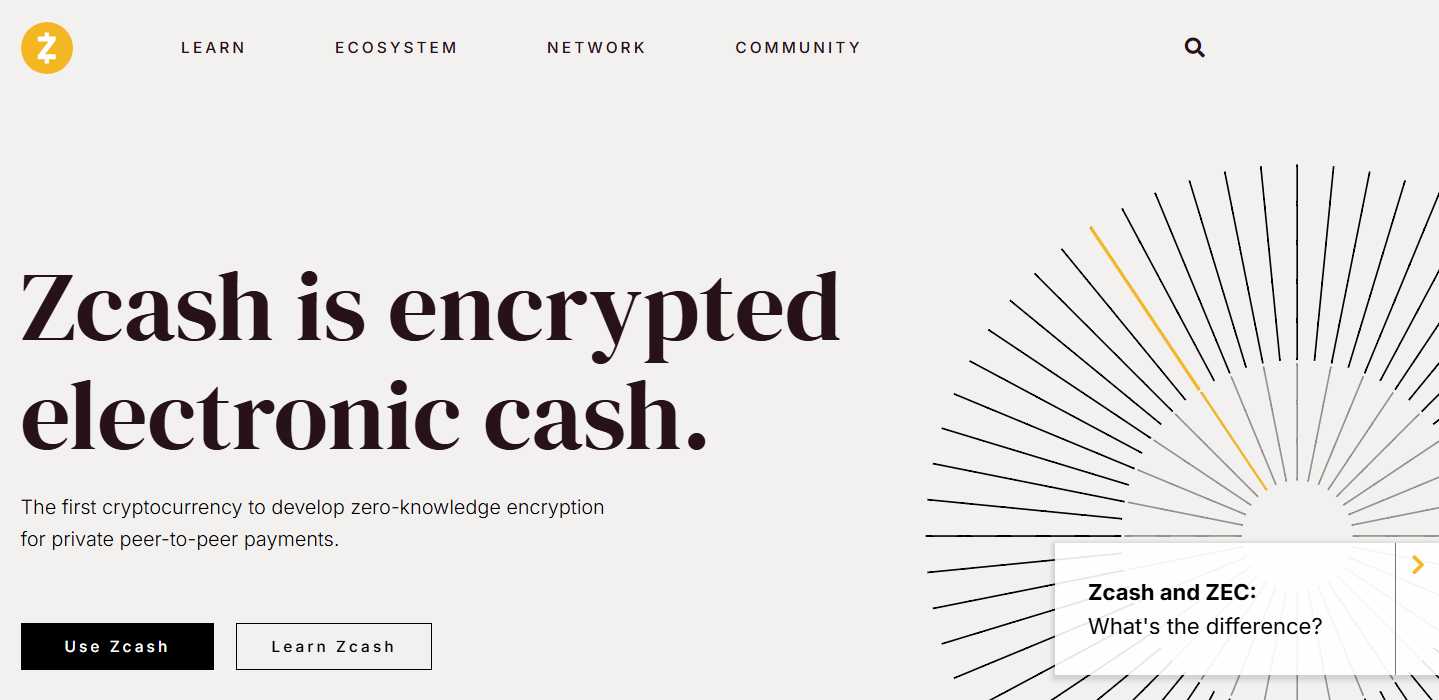
The network uses zk-SNARKs, a form of zero-knowledge proof that lets transactions be verified without revealing the sender, receiver, or amount. Zcash runs on a proof-of-work consensus model and maintains a total supply cap of 21 million coins. Its development is supported by the Electric Coin Company, the Zcash Foundation, and a broader open-source community.
3. Zano – $ZANO
Launched in 2019, Zano is a privacy-focused Layer 1 network built on an advanced version of the CryptoNote protocol. It is designed to support untraceable transactions, confidential assets, and private on-chain applications, with privacy enforced by default across the system.

The blockchain uses a hybrid proof-of-work and proof-of-stake model, including the Zarcanum scheme that hides staking balances and rewards. It combines ring signatures, stealth addresses, and confidential transactions to conceal senders, receivers, and amounts, while also supporting private tokens, escrow contracts, and peer-to-peer marketplace features.
4. Firo – $FIRO
Originally launched in 2016 as Zcoin, Firo is a privacy-focused cryptocurrency designed to provide untraceable digital cash. The network introduced the Lelantus protocol, later upgraded to Lelantus Spark, to enable anonymous transactions without trusted setups. This system hides the sender, receiver, and transaction amounts while maintaining verifiability on the blockchain.

Firo operates on a hybrid proof-of-work and masternode model, using the ASIC-resistant FiroPoW algorithm to promote decentralized mining. Additional features like Dandelion++ help obscure transaction origins at the network level, improving overall privacy.
What Are Privacy Coins?
Privacy coins are cryptocurrencies designed to protect the identity of users and the details of their transactions. While crypto has always promoted decentralization and financial independence, privacy coins take that idea a step further by focusing on confidentiality at the protocol level.
In simple terms, a privacy coin is built to prioritize transaction anonymity. Instead of leaving a fully transparent trail on the blockchain, these networks use advanced cryptographic techniques to hide addresses, balances, or other transaction data, making them much harder to trace.
As blockchain technology has evolved, different projects have taken different approaches to this challenge. Some networks rely on stealth addresses, which create a one-time destination address for every transaction. Others use ring signatures and Ring Confidential Transactions (RingCT) to mix transaction data and conceal amounts. A few projects focus on network-level privacy, where the goal is to hide metadata such as IP addresses and communication patterns.
Because of these different design choices, privacy coins serve a range of use cases, from anonymous peer-to-peer payments to private smart contracts and secure communication layers. This diversity is what shapes the modern privacy narrative, with each project contributing its own approach to financial confidentiality.
Why the Privacy Narrative Is Growing
Interest in privacy tokens is rising as more users become aware of how transparent public blockchains really are. Many people use privacy coins to protect their financial history, avoid unnecessary surveillance, or keep business transactions confidential. In certain regions, hiding visible wealth can also be a matter of personal safety, which makes privacy tools more relevant.
At the same time, the topic raises ethical questions. While privacy is seen by many as a basic financial right, regulators worry about the misuse of these tools for illegal activity. This has led to delistings, restrictions, and ongoing policy debates. Despite that, most activity remains legitimate, and the conversation continues to balance personal privacy with regulatory oversight.
Bottom Line
The return of the privacy narrative shows how the market moves in cycles. As regulation tightens and transparency becomes the norm across public blockchains, privacy tokens are once again drawing attention from users who value financial confidentiality. This shift is not just about speculation; it reflects a growing awareness that open ledgers do not fit every use case.
From fully private payment coins to networks offering confidential smart contracts and metadata protection, privacy tokens now represent a diverse and evolving sector. At the same time, crypto narratives tend to shift quickly, as seen with the earlier momentum around AI tokens. If you want to explore that segment as well, you can take a look at our guide on the best AI crypto projects next.