How to Get XRP Testnet Tokens

Nesta página
For crypto enthusiasts interested in the XRPL blockchain, interacting with the testnet network before the mainnet is recommended. The XRP Ledger testnet environment is a secure simulation of the blockchain’s mainnet. It allows you to safely test applications without risking real assets, as XRP tokens on the testnet have no real value. In this article, we’ll learn about the XRPL testnet and provide easy steps to get XRP testnet tokens for dApp development.
Can I Get XRP Testnet Tokens?
Yes, you can obtain free XRP testnet tokens through the official XRPL faucet or reputable alternatives that are supported. Faucets are distribution platforms for testnet tokens, and several hold XRP testnet tokens for public use. These tokens, which carry no monetary value, are required to test transactions, smart contracts, and engage with the XRP Ledger’s features.
XRP testnet tokens imitate real coins but can be used only in any testnet environments on XRPL (Testnet, Devnet, and Xahau). The first step to getting free XRP testnet tokens is setting up an XRP-compatible Web3 wallet. GateHub, Bifrost, and Edge are among the best XRP wallets, so they are ideal options for getting XRP testnet tokens.
Once your wallet is fully prepared, visit a reputable XRPL faucet to request free testnet tokens. For optimal reliability, use a faucet listed in the XRPL developer documentation. However, remember that you cannot buy, sell, or swap XRP testnet tokens for real assets.
Steps to Get XRP Testnet Tokens
Before you request XRP testnet tokens, make sure your wallet is set to the XRPL testnet or devnet. If it isn’t, you can set it up yourself or use ChainList for help. When your wallet is ready, you can request XRP testnet tokens and start testing on XRPL. Here are simple steps to get free testnet tokens from the top faucets.
1. The XRP Ledger Explorer Testnet Faucet
The XRP Ledger Explorer faucet, run by Ripple Foundation, is the official faucet for the XRPL network. The platform is fast and efficient, and distributes test tokens for all testnet environments on XRPL. That is, users can request tokens for the XRP Testnet, Devnet, or Xahau Testnet on the blockchain. Here’s how to get XRP testnet tokens from the official XRPL Explorer faucet:
Step 1: Go to the XRPL Explorer faucet in your browser. Make sure your wallet is set to the correct testnet network before requesting tokens.
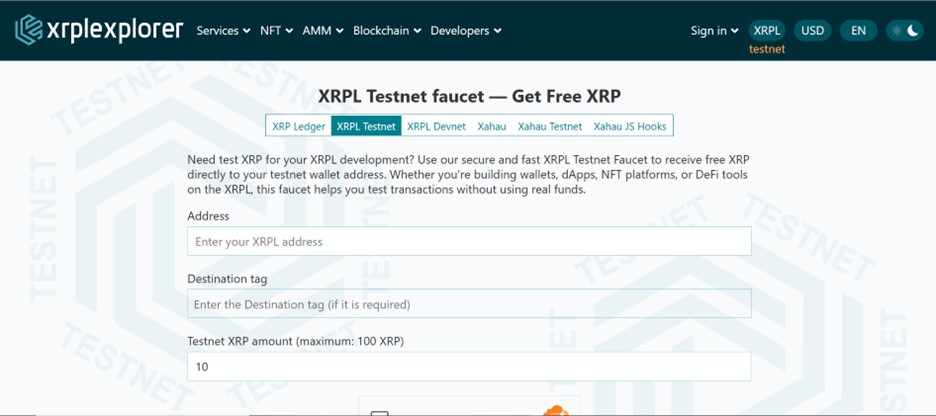
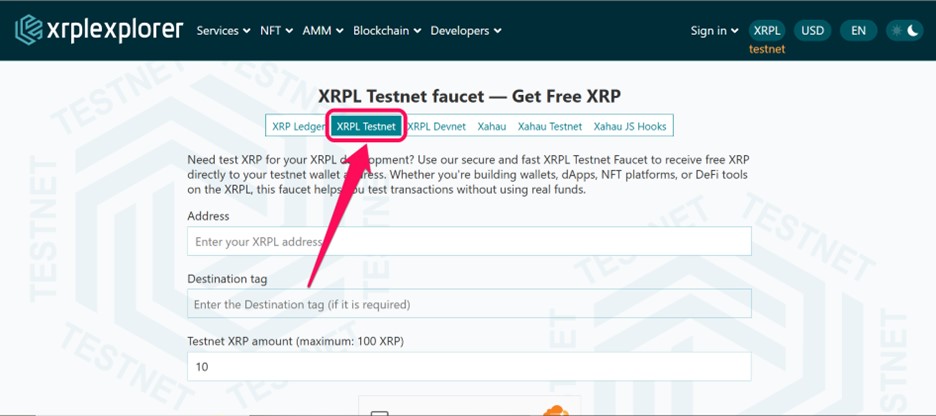
Step 2: In the faucet interface, select your desired network: XRP Testnet, Devnet, or Xahau Testnet.
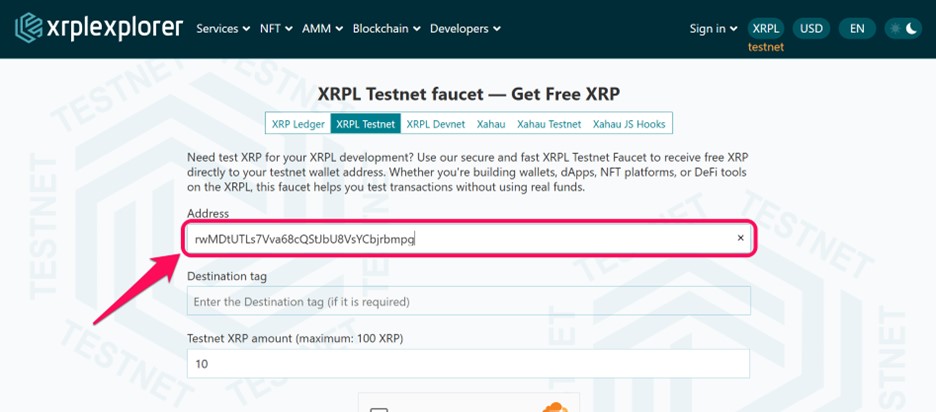
Step 3: Copy your XRP testnet wallet address from your wallet and paste it into the faucet’s address field.
Step 4: Enter the amount of XRP testnet tokens you want, up to the daily limit, in the provided field.
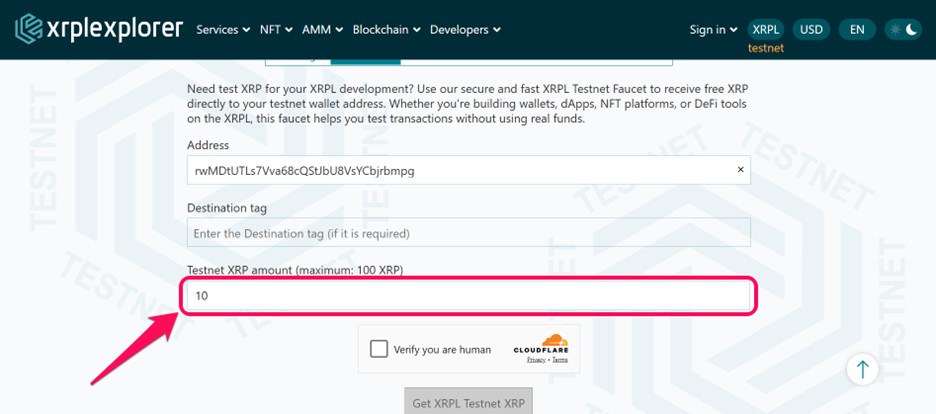
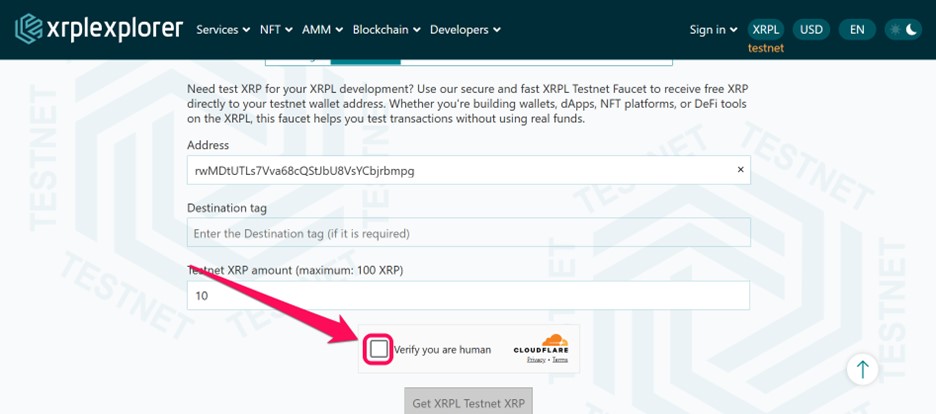
Step 5: Complete the CAPTCHA or human verification prompt as displayed on the faucet.
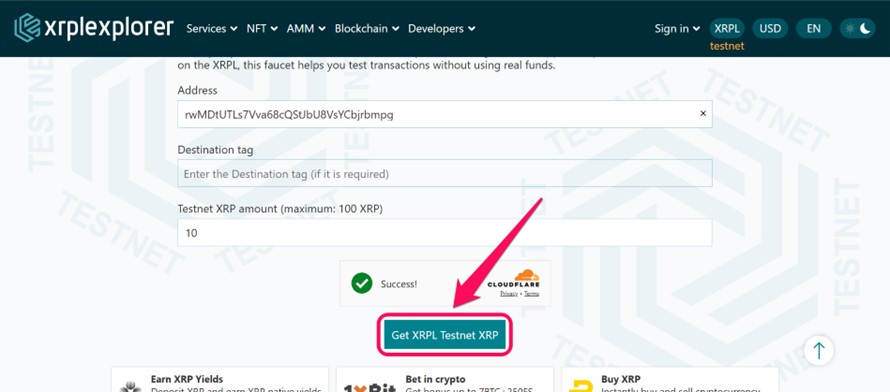
Step 6: Click ‘Get XRPL Testnet XRP’ to submit your request. After submission, check your wallet for the testnet tokens that have been deposited.
XRP Ledger Explorer Faucet Limitations
Although the platform allows users to select the desired amount of tokens, there’s a daily limit of 100 tXRP that you can obtain. This limit prevents the malicious use of scarce tokens, ensuring every user has a chance to obtain the test XRP they need to explore smart contracts on XRPL.
Other Faucets – Are They Worth It?
Alternative faucets can be beneficial, especially for users looking to earn more tokens than a single faucet provides. Faucets like Bithomp and Allcoins are ideal alternatives to expand your XRP testnet reserve. Combining these platforms also allows you to evade limitations placed on each faucet, ensuring you don’t have to wait days to get enough tokens to browse the Ripple testnet. However, remain cautious and do not provide personal information on faucets to avoid scams.
About XRP
The question “What is XRP?” is what runs through the mind when you’re in this section. In simple terms, XRP is the native token on the XRP Ledger (XRPL). XRPL is a distributed, open-source, decentralised blockchain powered by the Ripple fintech company.
The XRP Ledger provides fast, cost-effective, and secure transactions, using a unique Ripple Protocol Consensus Algorithm (RPCA). The token, XRP, facilitates value transfers across borders, acting as a bridge currency in Ripple’s payment network, RippleNet.
Bottom Line
The XRP testnet environment allows users to interact and build on the network using testnet tokens. These tokens facilitate transactions on the network, ensuring you do not pay real money to explore features and dApps on XRPL. Hence, follow the steps and tips in this post to easily get free testnet tokens needed for executing tasks on the XRPL testnet.
FAQs
Mining XRP is not possible in the same manner as other cryptocurrencies, such as Bitcoin. When Ripple launched, all 100 billion XRP tokens were pre-mined, meaning they were created in one go. As a result, it is not possible to mine XRP using the traditional methods employed for other digital currencies.
No. Ripple avoids paying XRP as a reward for operating a validator so that such incentives do not warp the behaviour of validators.
According to the latest data, the total amount of XRP in circulation is slightly less than 100 billion due to this ongoing burn. For instance, in the fiscal year 2022, approximately 10 million XRP were burned through transaction fees, subtly influencing the supply-demand dynamics of the XRP market.
1 XRP is equivalent to 1,000,000 drops. You can buy fractions of XRP; a single XRP is divisible up to six decimal points, with 0.000001 being the smallest unit, known as a “drop”.
You can earn XRP without investment by participating in no-cost programs, such as crypto faucets, completing surveys, joining airdrops, and utilizing reward-based platforms.