How to Bridge to TRON: A Step-by-Step Guide

Bu sayfada
TRON is a popular, high-performance blockchain network enabling fast cryptocurrency transaction processing at low fees. The cryptocurrency network supports decentralized applications (dApps), smart contracts, and a wide range of digital assets. It’s no wonder that the TRON network is a top choice for millions of crypto enthusiasts for crypto storage and transacting. It’s also possible to bridge to TRON from other networks to enjoy its perks. If you’re interested in exploring the TRON ecosystem, this guide is for you! This article explains the most straightforward steps for bridging to TRON from other blockchains.
Can I Bridge to TRON?
Yes, you can bridge tokens to TRON from EVM chains like Base, Ethereum, Arbitrum, and non-EVM networks like Solana and Sui. However, you must use a TRON-compatible cross-chain bridge to initiate the bridging request. These bridge protocols make the process easier, allowing you to make transfers to the TRON ecosystem within a few minutes. Bridge aggregators can also help find the most cost-effective and efficient route to bridge to TRON.
TRON bridging, like most cross-chain transactions, is not free of charge. The process involves both bridging and gas fees on the TRON network. When using bridge aggregators, you’ll need to fund your wallet with the native tokens in order to cover fees; bridge platform fees and gas fees. Make sure you have both the native token of the network you’re bridging from and $TRX tokens to cover gas fees on the Tron network.
Key Things to Keep in Mind:
Consider the following prerequisites before initiating the bridging process to the TRON ecosystem.
1. Gas Fees:
As stated earlier, you must hold extra tokens from both blockchains to cover bridging and gas fees. You’ll need $TRX to cover the standard destination network fee on the TRON network. You can purchase extra $TRX tokens from OKX or any centralized exchanges that support withdrawals to the TRON ecosystem.
2. Wallet:
A Web3 wallet is essential for bridging from any blockchain, and TRON isn’t exempted. While wallets like MetaMask and Trust Wallet are widely used for EVM-compatible networks, bridging to TRON requires a dedicated TRON wallet to manage your assets on the TRON blockchain. You’ll need to link the wallet containing the assets you want to bridge with your selected cross-chain bridge to transfer to the TRON network.
Another secure option is TronLink, which is specifically designed for the TRON network. TronLink serves about 90% of users and is recommended by TRON founder Justin Sun. Ensure your wallet is set up and ready to receive tokens on the TRON network.
3. Add Support to Wallet (if Needed):
If the TRON network isn’t automatically found on the platform, you may have to manually add it to your wallet. Consult your wallet’s documentation for information on how to add support for TRON.
How to Bridge to TRON
Thanks to TRON’s reliability and broad applicability, numerous bridges facilitate transfers to the blockchain. Selecting the best one, however, depends on the network you wish to bridge from. This section will explore how to bridge to TRON using several cross-chain bridges, which we consider ideal for optimal versatility and security.
Using Defiway
The Defiway cross-chain bridge is ideal for everyone who prioritizes fast, secure, and cost-effective asset transfers between all blockchains. Defiway was built on key principles, which include easy-to-use interfaces, efficiency, flexibility, speed, and low fees for users. Defiway supports several networks, such as well-known chains like Ethereum, Binance Smart Chain, and TRON. Its commitment to efficient and secure bridging makes Defiway a valuable tool for new and experienced cryptocurrency users. These are all the definite steps for bridging assets, like each USDT, from other networks directly to TRON through Defiway.
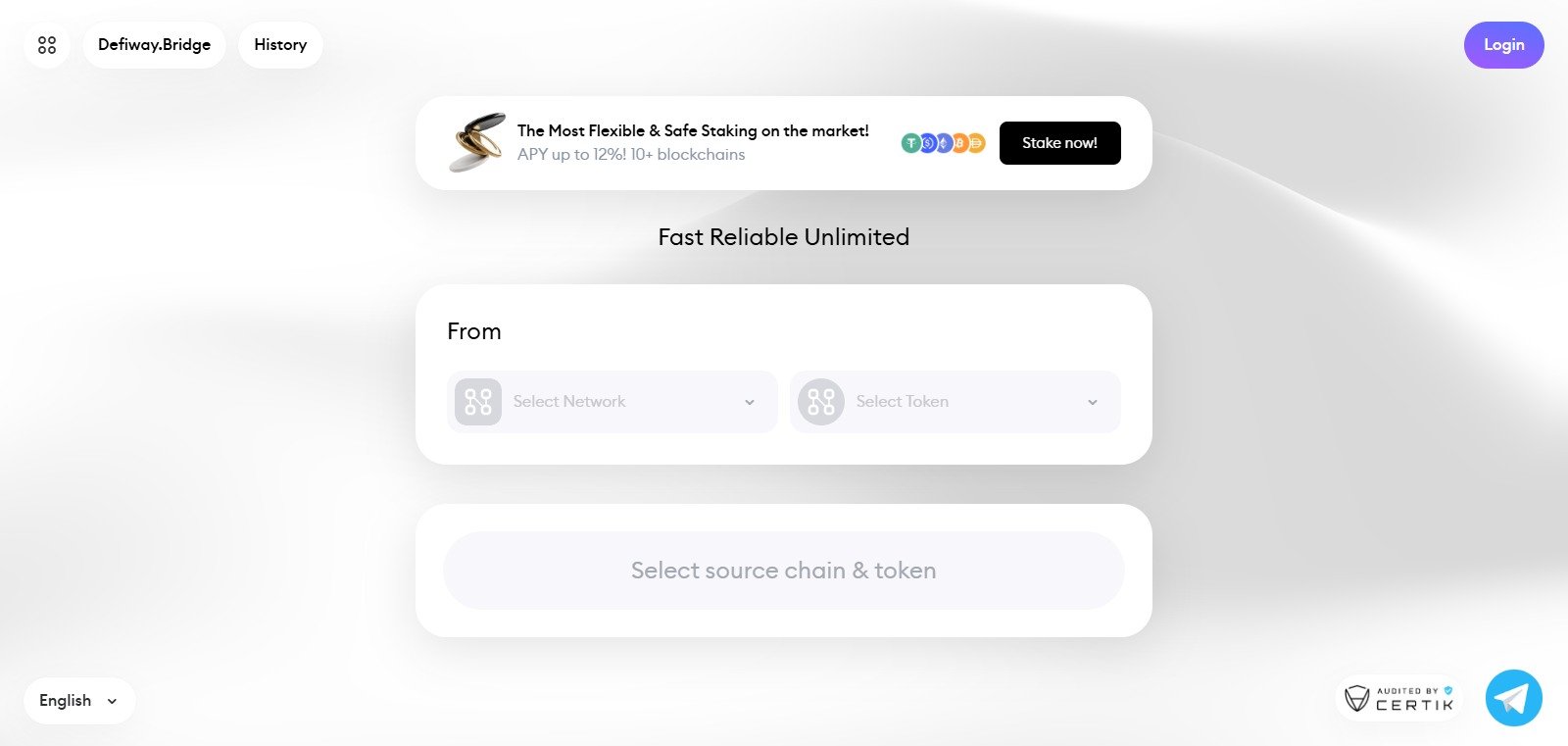
Step 1: Open Defiway via your web browser.
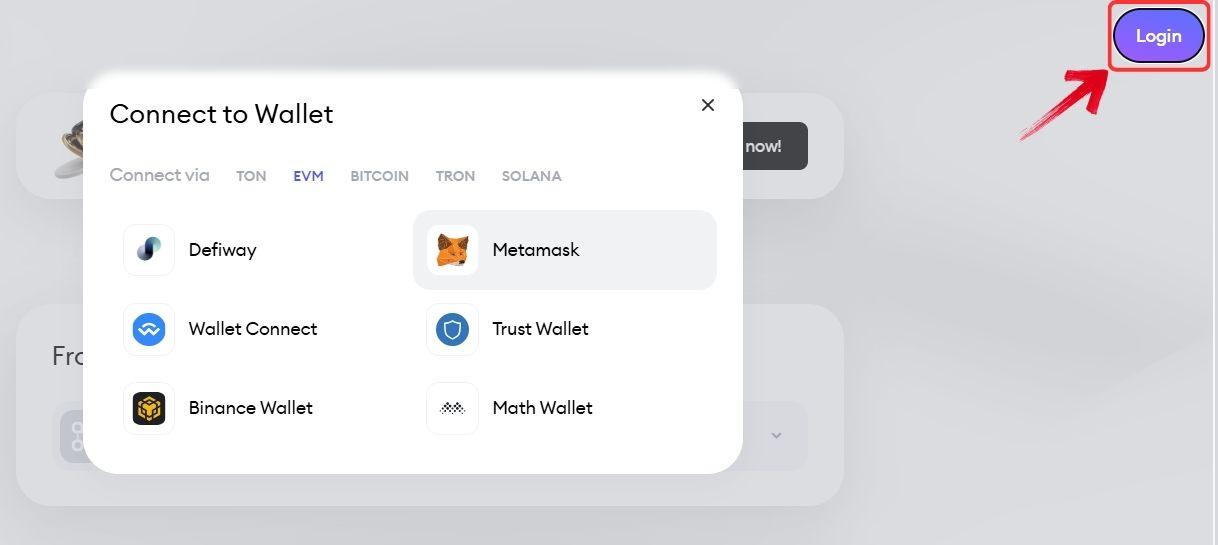
Step 2: Click on Login to connect your Web3 wallets, such as Metamask for EVM-compatible networks and TronLink for Tron Network.
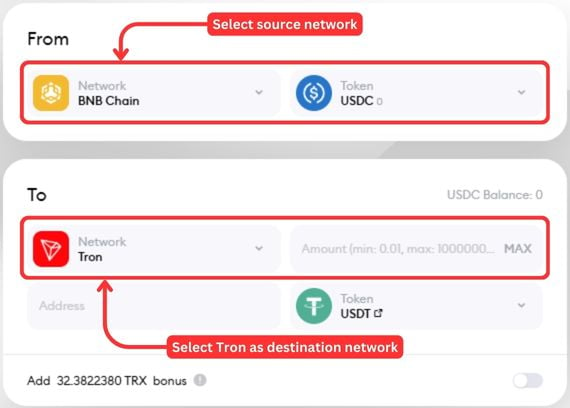
Step 3: Choose your source network (e.g., Avalanche, Ethereum, Solana, etc.) and select Tron as your destination network.
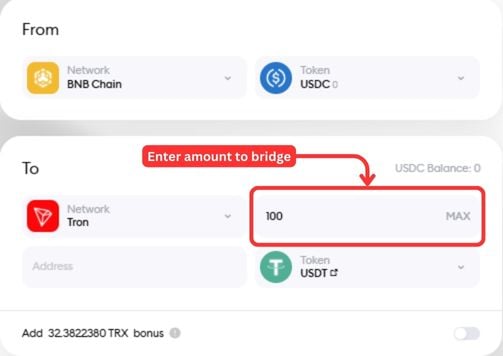
Step 4: Select USDT as the token you wish to transfer to the TRON blockchain and specify the amount.
Step 5: Finally, confirm the transaction and approve it in your wallet, to successfully bridge tokens to Tron network.
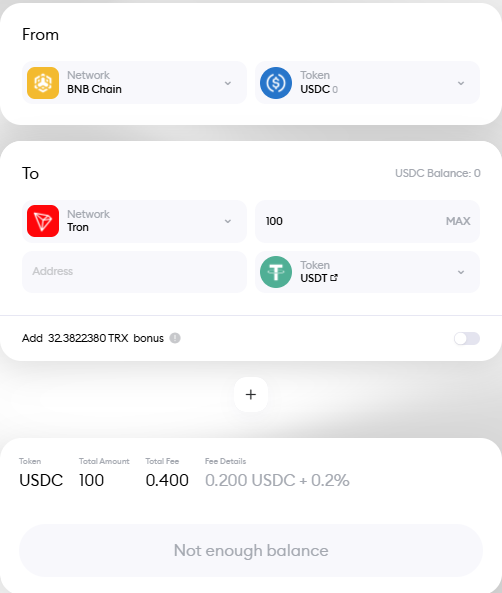
Using Rango Exchange
Rango Exchange is an aggregator, meaning it assists with finding the best route to bridge from other blockchains to TRON. The platform reviews bridging rates across all available bridges to provide the best route. Rango Exchange supports TRON bridging from almost any network, including Solana, Ethereum, BNB chain, and many more. At the time of writing, they’ve bridged over $2 billion across hundreds of thousands of wallets and propose this process, having used it many times without issue.
However, the additional protocol fee might be a let-off for users seeking more cost-effective alternatives. Let’s learn how to bridge to TRON using Rango Exchange from any network.
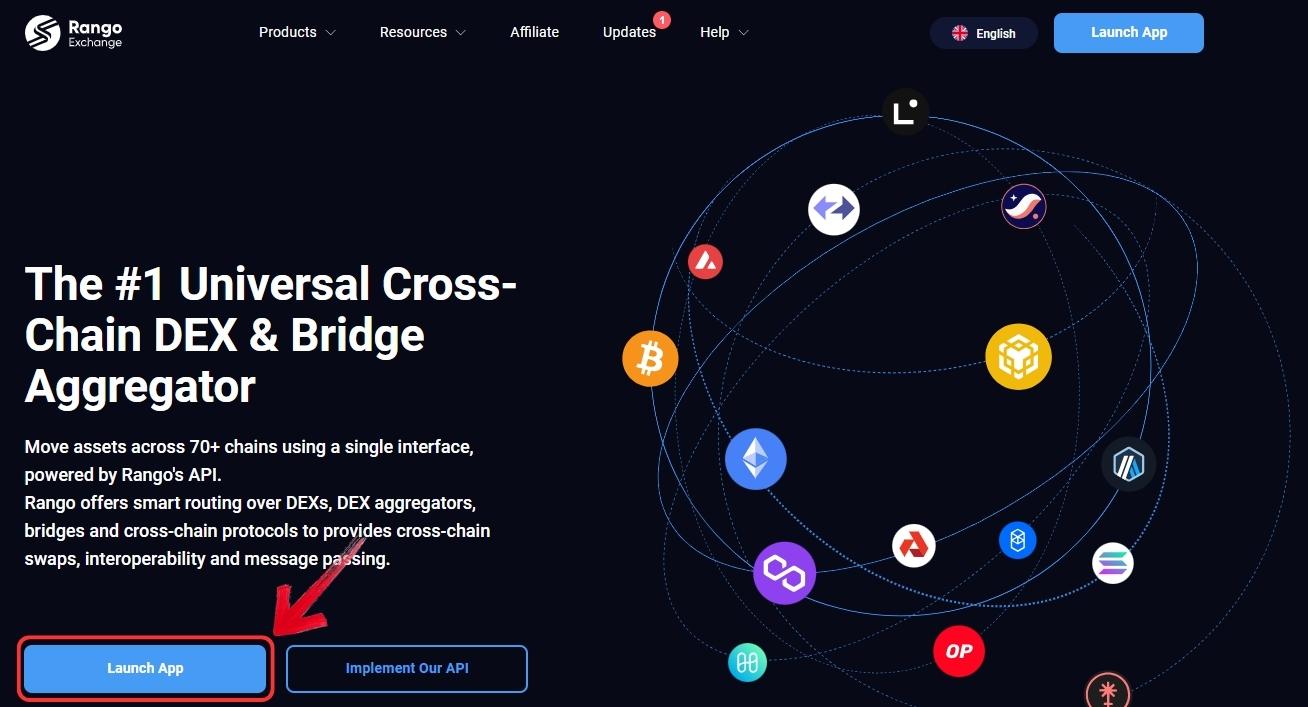
Step 1: Open your web browser and navigate the Rango Exchange website.
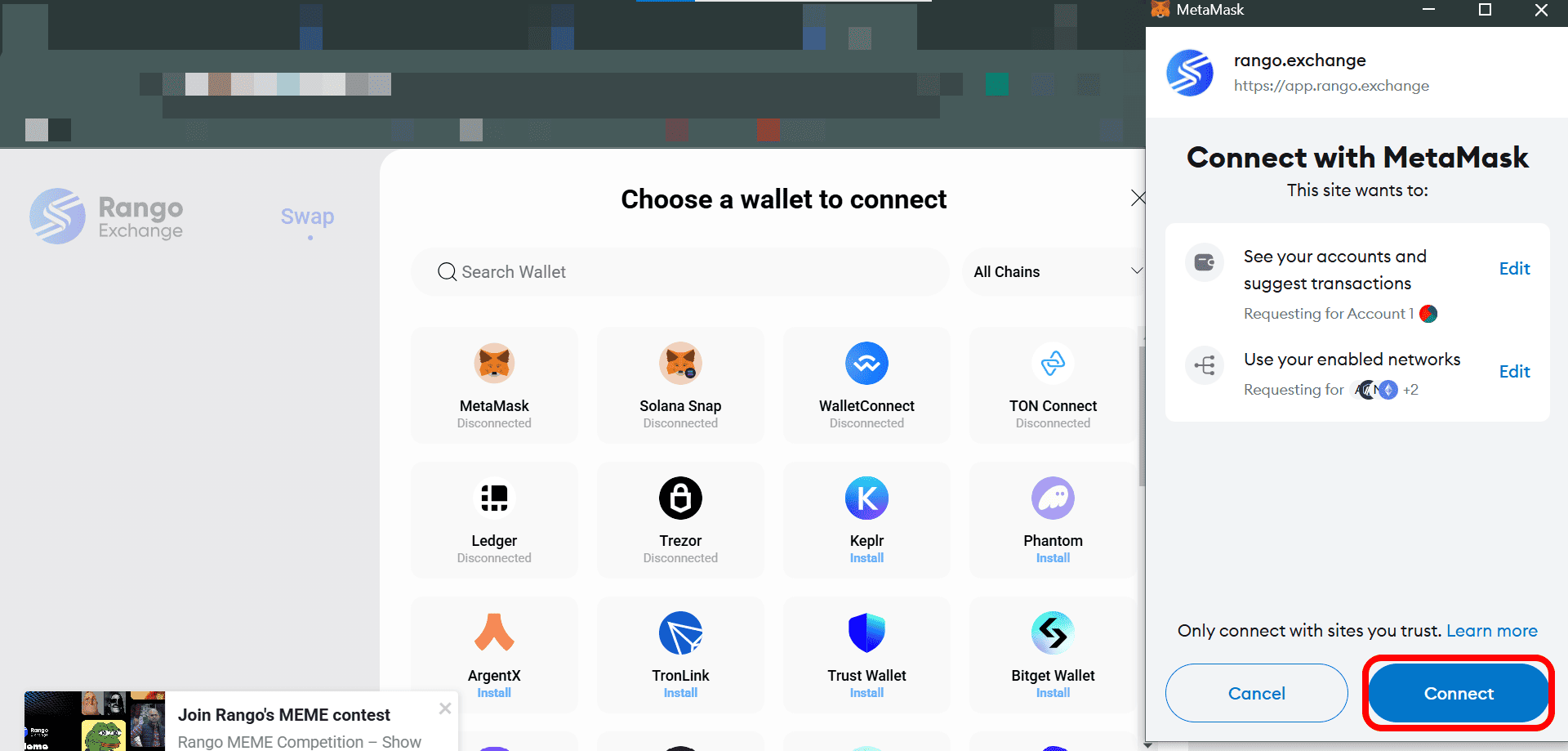
Step 2: Link your Tron wallet and the wallet containing the assets you want to bridge to TRON (e.g., Metamask).
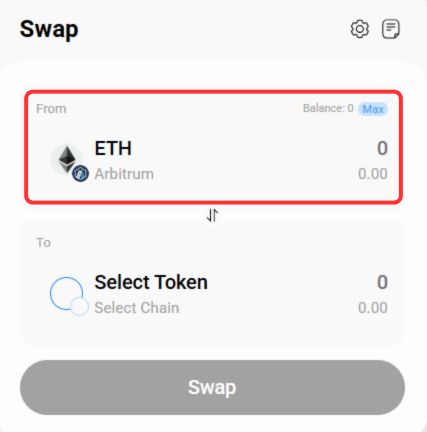
Step 3: Open the From field, then select the token and network you want to send.
Step 4: Select TRON as the network and $TRX as your preferred token in the To section.
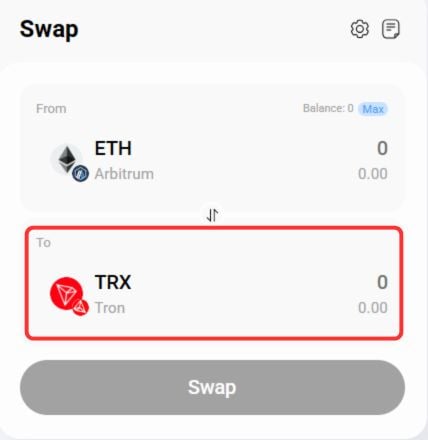
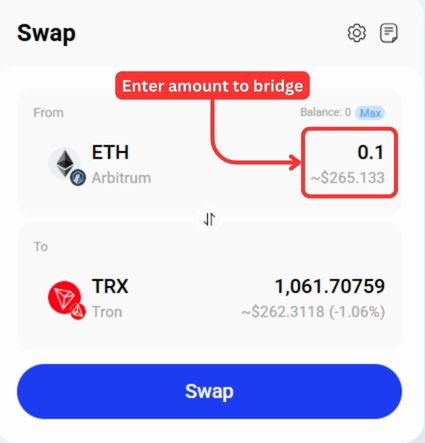
Step 5: To get routes for your bridge, enter the amount of selected token you wish to bridge to Tron Network.
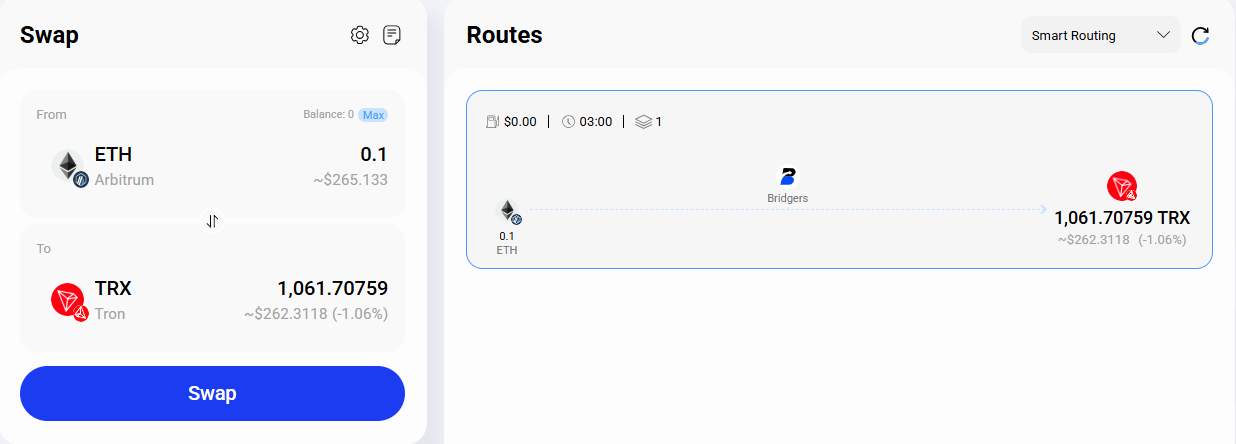
Step 6: Select the route that offers the best in terms of cost and security to bridge to Tron.
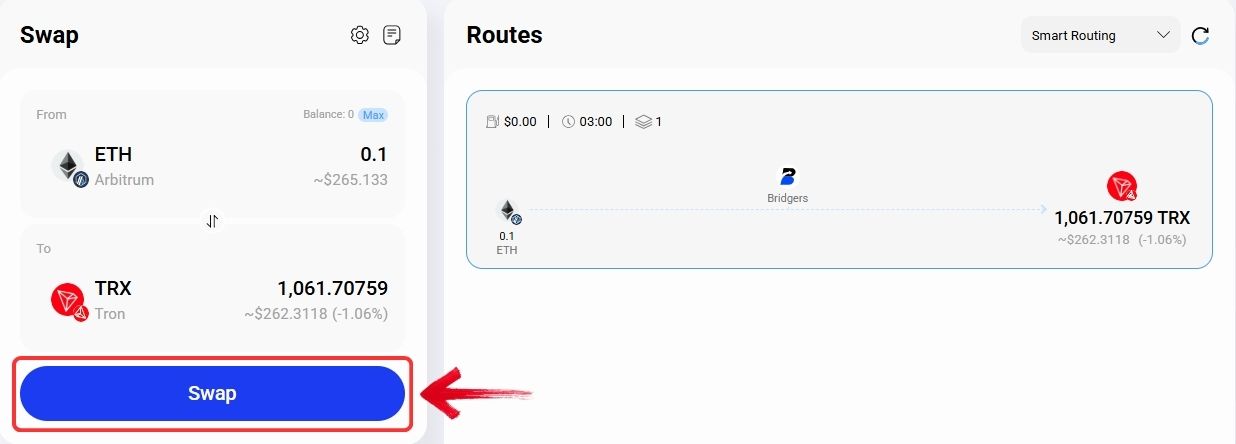
Step 7: Review the transaction details and click Swap to proceed. Confirm the transaction in your Tron wallet to complete the process.
TRON Bridging Fees
The fees attached to TRON bridging depend on the fee policy of your selected cross-chain bridge, the number of tokens transacted, and network-specific gas fees. For instance, bridging to TRON using Rhino.fi incurs a flat fee of 0.19% per transaction, plus gas fees. Extra protocol fees will be attached to each transaction if you’re using a cross-chain bridge aggregator. Essentially, the total transaction and bridging fee for every transaction will be displayed before you confirm the transaction. Always double-check transaction details and ensure you have enough $TRX for the bridging fee and extra tokens native to the network you’re bridging from.
About TRON
TRON is a blockchain platform that facilitates decentralized applications (dApps) and smart contracts with high throughput and scalability. The Tron Virtual Machine (TVM), compatible with Ethereum’s EVM, enables efficient smart contract deployment. Founded in 2017 by Justin Sun, the platform utilizes a delegated proof-of-stake (DPoS) consensus mechanism, enabling fast transaction processing and low fees. TRON network has over $10B in TVL, and its native token, $TRX, has broad applicability, as it is used by over 2 million active accounts on the blockchain daily.
Bottom Line
Bridging to TRON is simple, thanks to bridging platforms like RhinoFi or Rango Exchange. Following the steps highlighted in this post, you can explore the TRON network using assets formerly in a different blockchain. Remember to always double-check the details and fees before confirming any transaction. Also, keep extra tokens from TRON and the network you’re bridging from to cover bridging and gas fees and avoid unnecessary glitches.
FAQs
The gas fee for bridging from Ethereum to TRON depends on how busy the network is. Using the Ethereum blockchain during off-peak hours, you can cut about 50% of costs.
Cross-chain bridges are like blockchain networks that let assets like cryptocurrencies and NFTs move between networks that otherwise couldn’t work together. Imagine safe tunnels that join blockchain “cities” that are separate from each other.
Yes, your cross-chain transactions on bridges are secure and private, as you do not need to provide personal information to the bridge.
No, although they are similar, TRON and TRC20 are not the same. TRC20 is a token standard on the TRON blockchain, while TRON itself is a blockchain network. Consider TRON as the platform and TRC20 as a set of guidelines for token creation on that blockchain.
No, Metamask only works for Ethereum and Ethereum chains. The TRON network (TRC 20) can not be added to Metamask, as it is a non-EVM-compatible blockchain.