



Leverage trading in crypto has grown fast as more traders move into derivatives markets. The appeal is simple. Higher exposure, faster trades, and the ability to take both long and short positions in almost any market condition.
But choosing the right platform is where most traders go wrong. Not every exchange handles volatility well, and not every platform offers fair pricing, real liquidity, or reliable execution. These small differences become expensive very quickly when leverage is involved.
In this guide, we break down the best crypto leverage trading platforms based on what actually matters in real trading. Fees, liquidity, execution speed, and overall platform stability. Instead of just listing features, the focus is on how these platforms perform when you are actively trading.
Top 9 Crypto Leverage Exchanges
When comparing crypto leverage trading platforms, surface-level features do not help much. What matters is how the platform behaves once real capital is involved and markets start moving fast. The exchanges in this list were selected based on a few practical factors that directly impact trading outcomes, mainly fee structure, depth of liquidity and spreads, execution stability during volatility, and how reliable the system remains under pressure. We also looked at derivatives coverage and overall consistency, so the platforms listed here reflect what traders actually experience, not just what is advertised.
1. MEXC
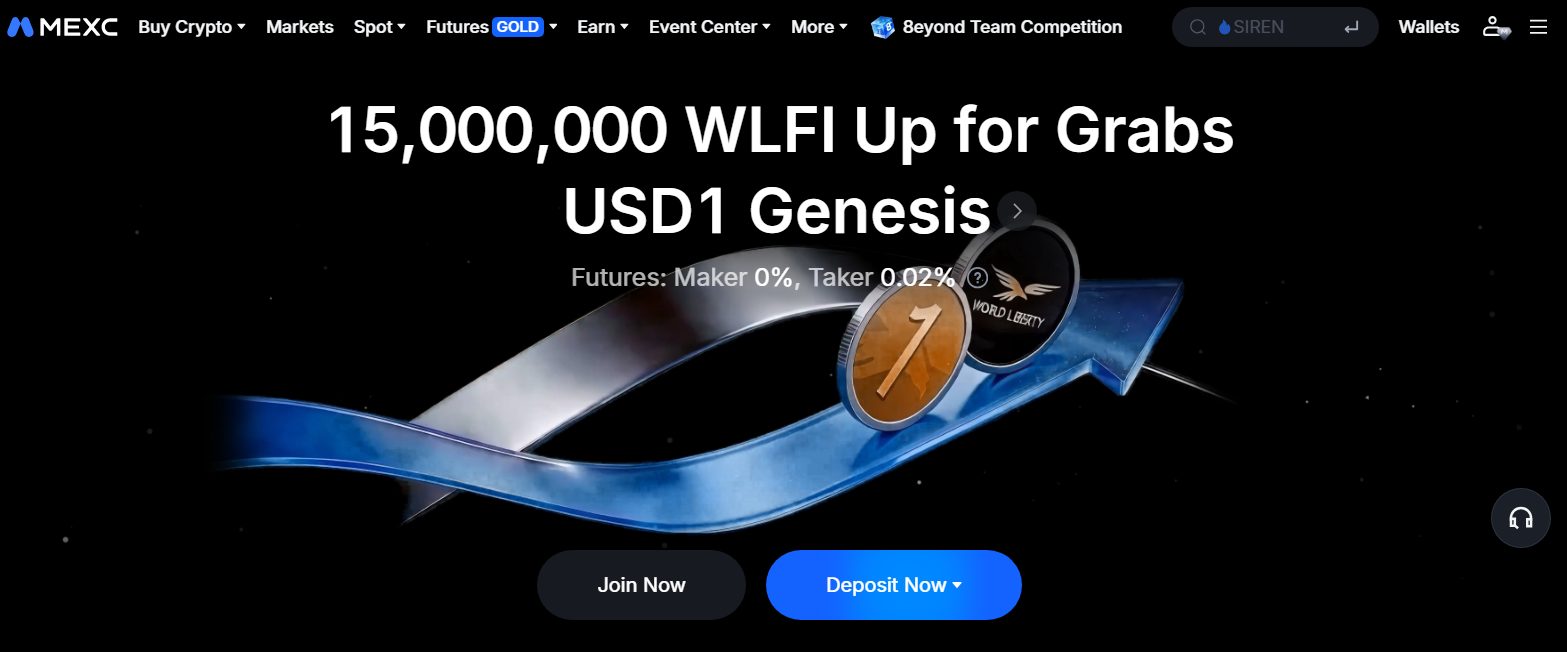
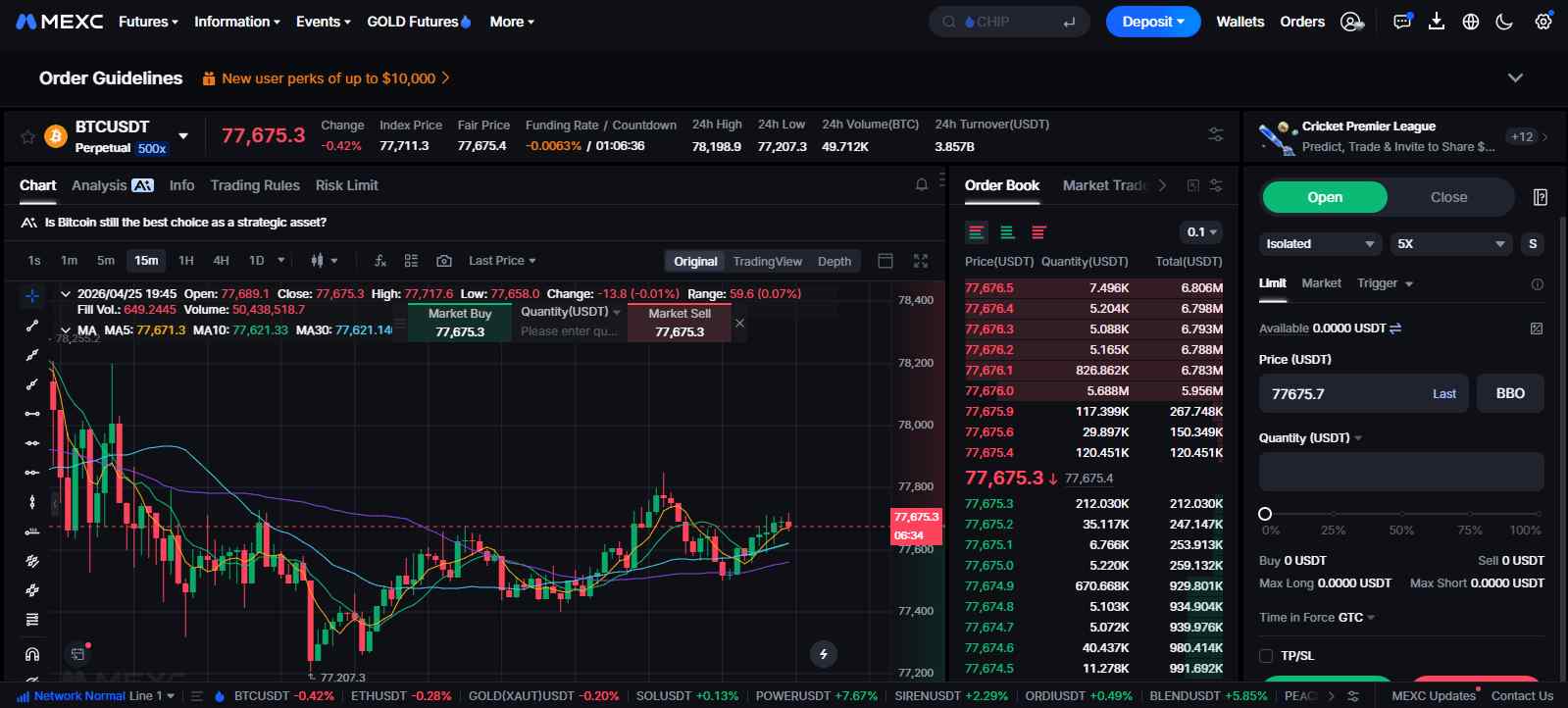
MEXC ranks first among the best crypto leverage exchanges largely because it combines aggressive trading conditions with depth that active derivatives traders usually look for. Fees remain one of its biggest draws, with 0% maker and 0.02% taker fees, while some contract promotions can reduce fees even further. Maximum leverage reaches 500x on select markets, and the exchange supports 894+ perpetual contracts across USDT-M and Coin-M products, including crypto, tokenized stocks, and commodities.
In leverage trading, fees eat up a large portion of your profits, especially for active traders opening and closing positions frequently. Definitely check out our free win rate and profit calculator to see how much fees you would pay on different platforms and how your profitability changes.
Its derivatives market depth is also a big part of the appeal. Open interest recently sat around $5.85 billion, while historical open interest has often pushed much higher, at times moving near the $10 billion to $12 billion range. The OI to 24-hour volume ratio of 0.7109, near-neutral 1.0012 long/short ratio, and funding around -0.0073% all point to fairly balanced positioning rather than a heavily crowded market.
Execution is another strength. MEXC has built a strong reputation for tight spreads, stable performance during volatility, and fast matching infrastructure. For leveraged traders, that matters as much as fees. Risk tools cover the essentials too, with isolated and cross margin, hedge mode, trigger orders, chase limit orders, and other advanced order options, even if collateral flexibility is more limited than some portfolio margin competitors.
One thing many traders value is market access. MEXC is often among the first major exchanges to list new high-demand assets. That can bring thinner liquidity and higher spreads early on, so it comes with risk, but it also creates opportunities many traders specifically seek out. Add proof of reserves, trust score 10, 2FA and withdrawal password protection, and MEXC remains difficult to beat in this category.
| 👍 MEXC Pros | 👎 MEXC Cons |
|---|---|
| ✅ Very low futures trading fees | ❌ New listings can have thinner liquidity |
| ✅ Up to 500x leverage available | ❌ Advanced order suite is not deepest |
| ✅ Deep liquidity across major markets | ❌ No portfolio margin flexibility |
| ✅ 894+ perpetual contracts supported | ❌ Withdrawal issues |
| ✅ Proof of reserves transparency | |
| ✅ Supports crypto, stocks, commodities |
2. Binance
Binance remains one of the benchmarks among high liquidity crypto leverage platforms, largely because few exchanges match its depth across markets, collateral options, and derivatives volume. Daily futures volume around $34.05 billion is in a different tier from most competitors, and that liquidity tends to show up where it matters, tighter execution, deeper books, and less slippage when size increases. With average bid-ask spreads around 0.237% and strong liquidity scores, Binance still sets a high bar for exchanges for leveraged crypto trading.
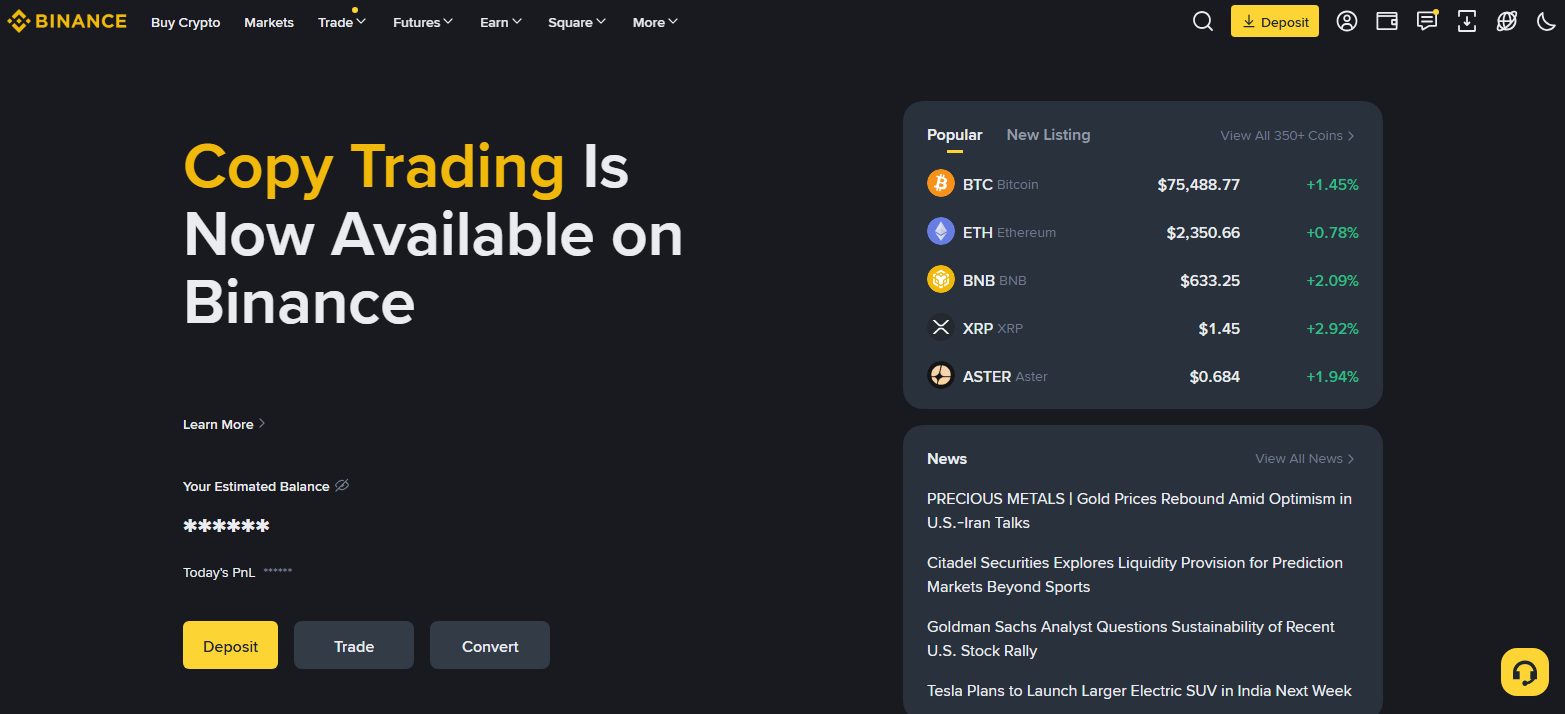
The trading conditions are competitive as well. Fees sit at 0.02% maker and 0.05% taker, while TradFi-linked products can go lower. Up to 150x leverage is available, alongside roughly 650 futures contracts covering crypto, commodities, stocks, and indices. One area where Binance separates itself is margin flexibility. Users can use up to 350 assets as collateral, while isolated, cross, and portfolio margin modes add much more room for structured risk management than many competitors offer.
This is also one of the more developed risk infrastructures in the market. Proof of reserves, long operating history, and its standing among the most security-focused exchanges matter, particularly for larger traders.
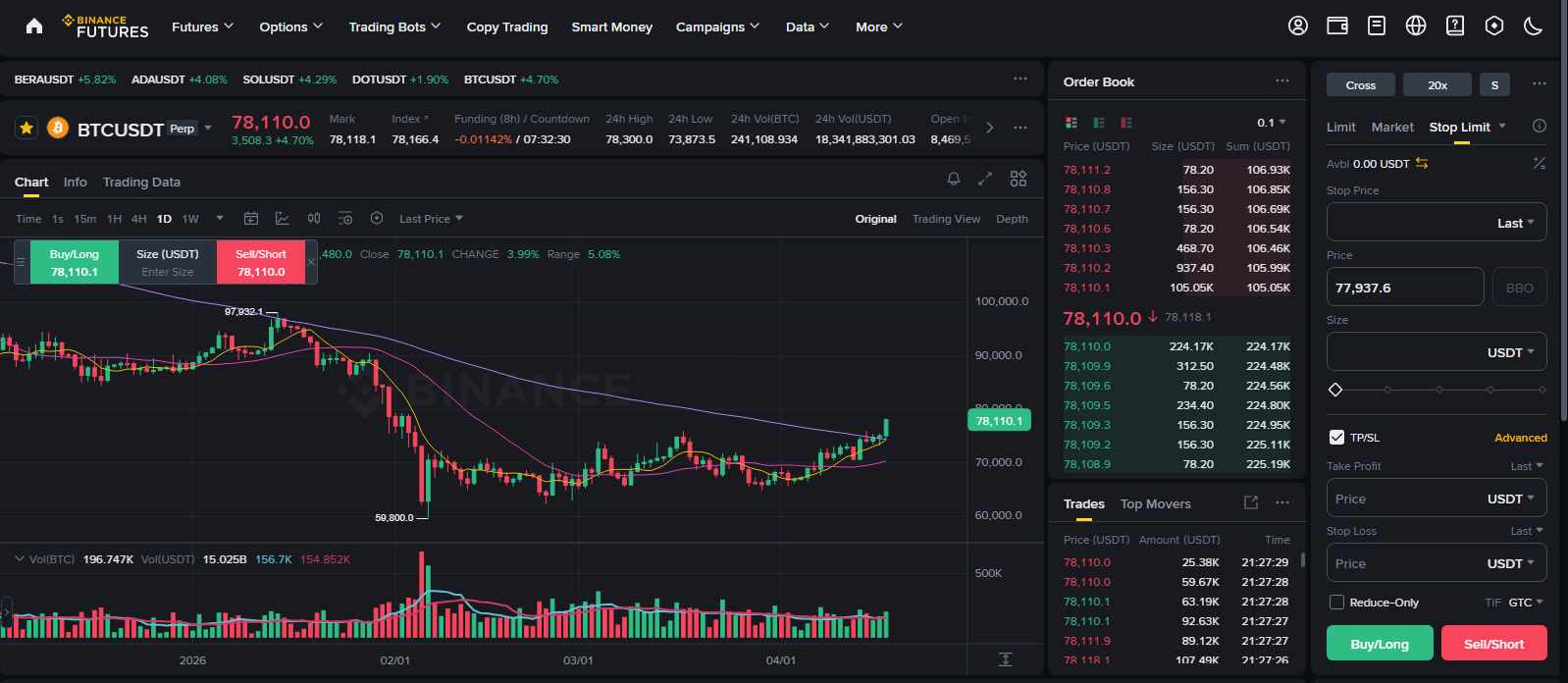
The tradeoff is accessibility. Mandatory KYC will be a drawback for some users, and the platform can feel heavier and more complex than leaner futures-first exchanges. Still, if your priority is deep liquidity, collateral flexibility, and broad derivatives access, Binance remains difficult to overlook.
| 👍 Binance Pros | 👎 Binance Cons |
|---|---|
| ✅ Industry-leading futures liquidity | ❌Mandatory KYC required |
| ✅ Portfolio margin available | ❌Access restrictions in some jurisdictions |
| ✅ Competitive futures trading fees | ❌ Not the cheapest for every trader |
| ✅ Very strong security reputation | |
| ✅ Deep liquidity and tight spreads |
3. Bybit
Bybit remains one of the more complete exchanges for leveraged trading, particularly for traders who prioritize liquidity and polished execution. Futures volume around $10.07 billion puts it ahead of many competitors here, while 715 futures contracts give it broad market access. With leverage up to 125x, it does not lead on raw leverage, but that is not really where its strength sits.
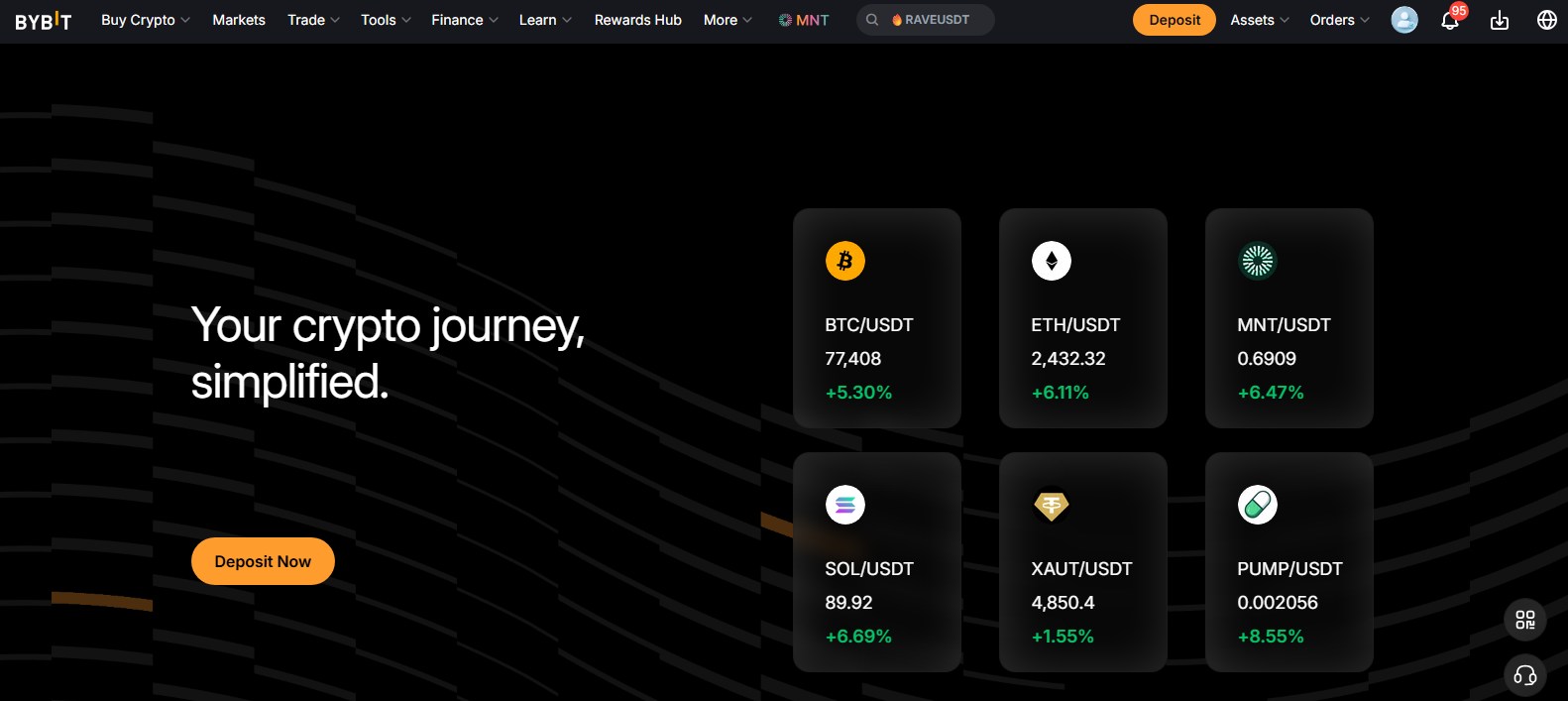
Its edge is more in market depth and trading infrastructure. Fees at 0.02% maker and 0.055% taker are competitive, liquidity is consistently strong, and the trading interface remains one of the more refined in the sector. Advanced order tools and workspace customization also tend to appeal to active traders who spend long hours on-platform.
Security is another reason Bybit still ranks here. Proof of reserves, strong operational reputation, and mature risk controls keep it competitive.
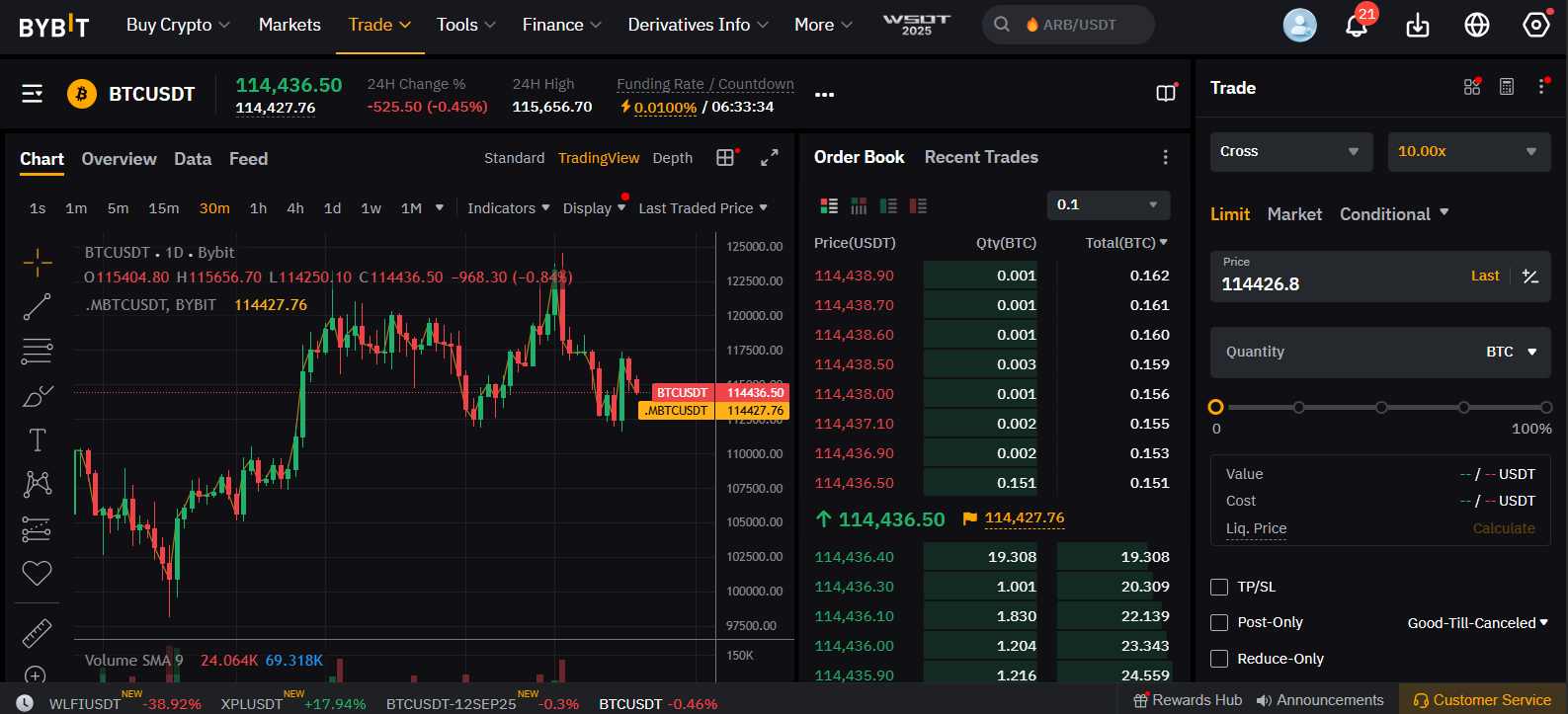
Where it falls slightly in this ranking is that some rivals now offer more aggressive leverage, cheaper fees, or broader collateral flexibility. Bybit feels less like a specialist leader in one metric and more like a very polished all-rounder.
| 👍 Bybit Pros | 👎 Bybit Cons |
|---|---|
| ✅ Very strong futures liquidity | ❌Mandatory KYC |
| ✅ Competitive trading fees | ❌Recent hacks may raise security concerns |
| ✅ Advanced order tools | |
| ✅ Highly refined trading interface | |
| ✅ Strong security reputation |
4. Bitget
Bitget remains a strong option for traders who want a balance between liquidity, derivatives depth, and risk tools without moving into a more complex institutional-style setup. With roughly $6.2 billion in futures volume, 656 contracts, and leverage up to 150x, it has enough scale to support active trading while still keeping the platform approachable.
Fees at 0.02% maker and 0.06% taker are fairly standard, not the cheapest in this ranking, but competitive enough when paired with strong liquidity. That liquidity matters more than headline fees for many traders, particularly when execution quality starts affecting larger orders. Advanced order types, customizable layouts, and support for crypto, commodities, and stock-linked products help round out the trading side well.
Bitget also tends to appeal to traders who care about security and platform safeguards. Proof of reserves, a strong security reputation, and a clean operating record all add credibility.
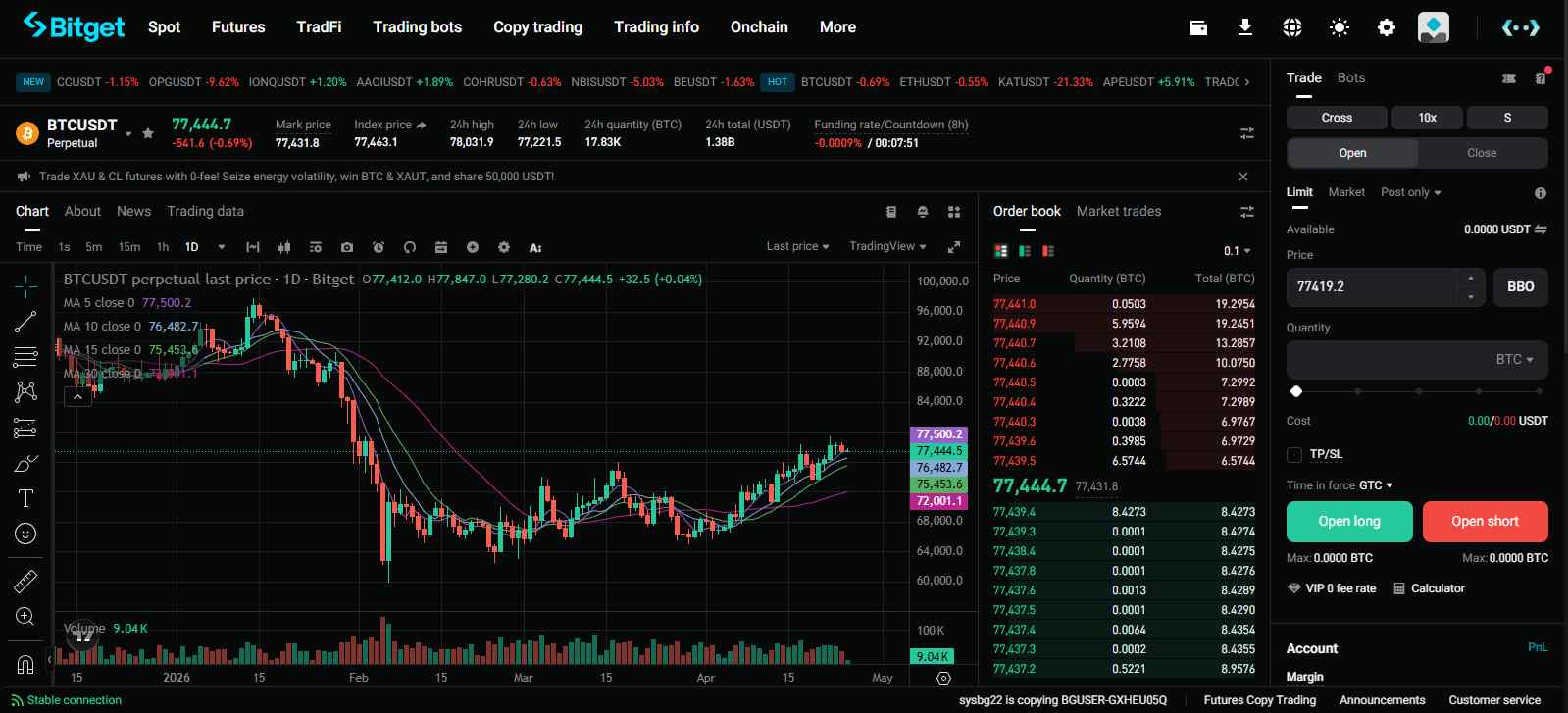
The tradeoff is that while Bitget performs well across many areas, it does not necessarily dominate one single area the way some higher-ranked exchanges do, whether that is fees, leverage, or collateral flexibility. It is more balanced than specialized.
| 👍 Pros | 👎 Cons |
|---|---|
| ✅ Strong derivatives liquidity | ❌ Platform can feel feature-heavy |
| ✅ Customizable trading interface | ❌ Some tools vary by jurisdiction |
| ✅ Strong security reputation | |
| ✅ Proof of reserves transparency | |
| ✅ Broad multi-asset market access |
5. Hyperliquid
Hyperliquid makes its way into this list as a decentralized leverage trading exchange, especially when you look at how traders evaluate execution reliability during volatile market conditions. Even large centralized exchanges with deep liquidity have, at times, faced issues where users report delays or temporary lockouts during high volatility, which can directly affect active trading strategies like scalping.
That is where Hyperliquid offers a different setup. It operates as a perp DEX with on-chain execution and real-time order book transparency, giving traders direct visibility into liquidity, open interest, and pricing behavior rather than relying on a centralized matching engine.
In terms of scale, Hyperliquid is not a small player anymore. With trading volume exceeding $7.63 billion and over 1.2 million users, it now ranks among the top platforms across both centralized and decentralized derivatives markets. It supports 331 perpetual contracts with leverage up to 40x, covering crypto as well as tokenized assets like commodities and stocks, which gives it one of the broader RWA exposures among leverage platforms.
From a cost perspective, fees are competitive for active traders, with -0.015% maker rebates and 0.045% taker fees. Liquidity is also stronger than what most traders expect from a decentralized venue, with tight spreads that can stay close to $0.01 on major perpetual pairs under normal conditions.
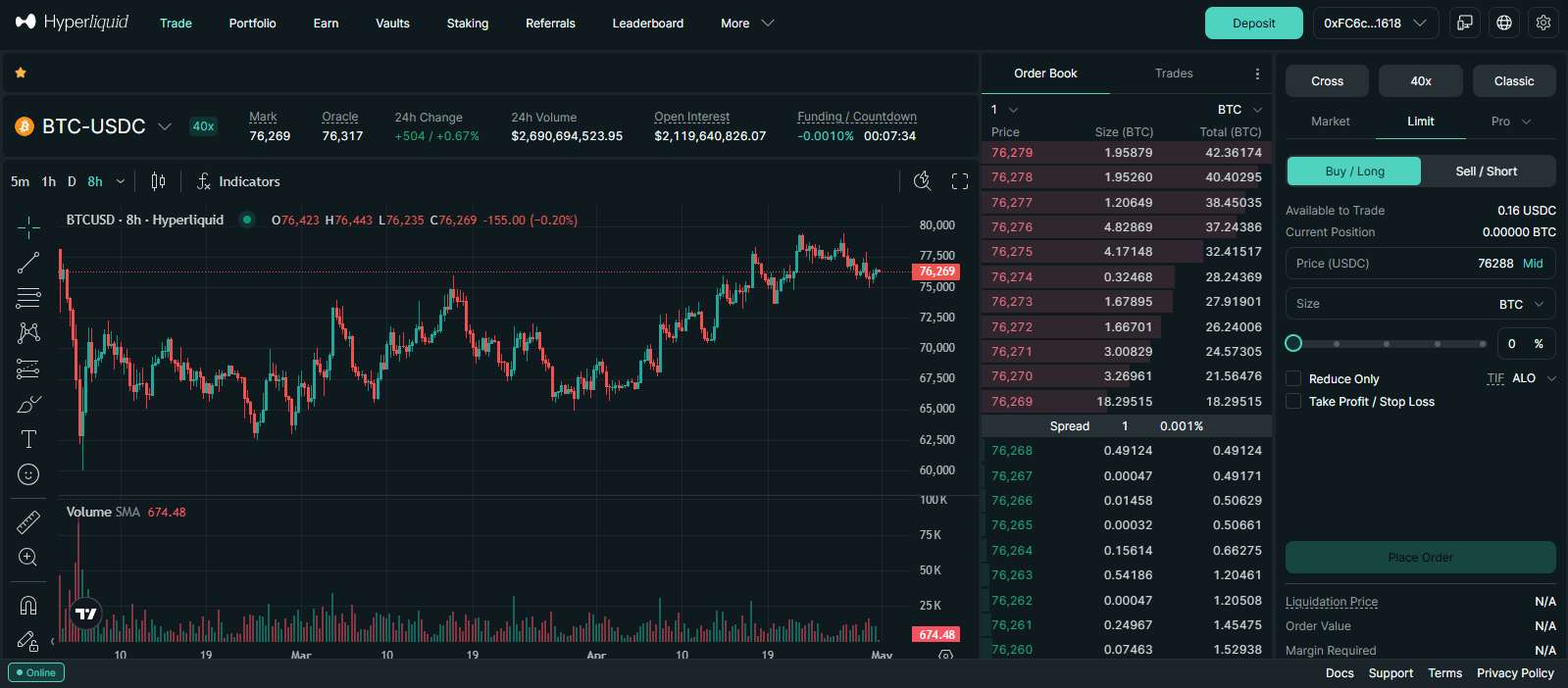
The platform supports both isolated and cross margin, along with sub-accounts for managing multiple strategies. The trading interface is designed in a way that feels similar to centralized exchanges, although the setup can take time to get used to, especially if you are new to perp DEX environments. In that case, you can go through our Hyperliquid account setup guide to get started and understand the platform before placing your first trades..
There are tradeoffs. There is no KYC requirement, but it is fully self-custodial, meaning fund security depends entirely on the user. Hyperliquid also does not currently offer a dedicated mobile app, which may matter for traders who prefer managing positions on the go.
| 👍 Hyperliquid Pros | 👎 Hyperliquid Cons |
|---|---|
| ✅ Low trading fees with maker rebates | ❌ No mobile app available |
| ✅ Deep liquidity with tight spreads | ❌ Setup can feel complex for beginners |
| ✅ No KYC and full self-custody | ❌ Self-custody shifts security responsibility |
| ✅ Real-time on-chain market transparency | |
| ✅ Supports crypto and RWA leverage markets | |
| ✅ Sub-accounts for strategy management |
6. Bitunix
Bitunix has moved up quickly because it combines a fairly mature derivatives setup with a newer exchange feel, which is not always common. It offers up to 200x leverage and supports 593 futures contracts, giving decent breadth across markets, while recent futures volume around $3.58 billion puts it in a much stronger liquidity category than many newer platforms. That matters, because despite being relatively young, it is not operating with thin participation.
Fees sit at 0.02% maker and 0.06% taker, which are fairly standard for active derivatives trading. Liquidity looks respectable as well. Average bid-ask spreads around 0.315% are noticeably tighter than some exchanges ranked around it, which supports more efficient execution, though still not necessarily at the level of the deepest top-tier venues. That balance between volume and spreads is part of why Bitunix stands out.
The platform also puts unusual attention into trade management. Alongside isolated and cross margin, it supports multi-trade mode, which lets you open multiple same-direction positions and manage each separately. There is also a Fixed Risk Orders feature, which is more practical than it sounds, particularly if you structure positions around predefined risk rather than sizing manually. Features like a break-even line directly on the chart and interface customization also show attention to trading workflow.
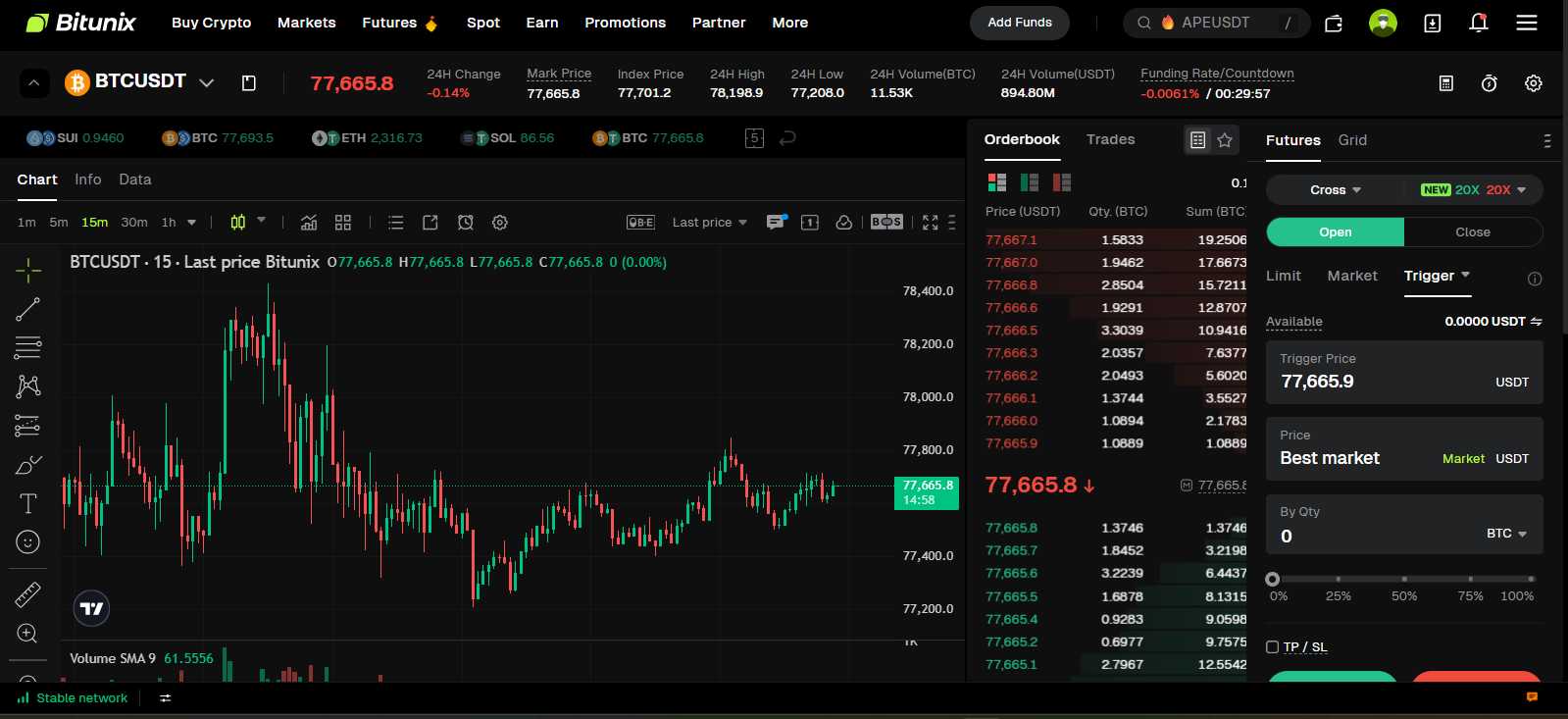
Advanced order tools are not the deepest, so very technical traders may find some limitations, but the platform covers most practical needs. Demo trading, proof of reserves, no mandatory KYC for many users, and a strong security focus make Bitunix a well-rounded option, even if its shorter operating history may still matter to more conservative traders.
| 👍 Bitunix Pros | 👎 Bitunix Cons |
|---|---|
| ✅ Up to 200x leverage available | ❌ Still a relatively new exchange |
| ✅ Competitive maker and taker fees | ❌ Advanced order suite is limited |
| ✅ Multi-trade mode adds flexibility | |
| ✅ Fixed Risk Orders improve trade control | |
| ✅ Demo trading available | |
| ✅ Publishes Proof of reserves |
7. Aster
Aster ranks among the more interesting high leverage crypto trading platforms because it gives you a different setup from the centralized exchanges in this list, particularly if you care about self-custody and trading through a perp DEX. That also comes with a learning curve, and if you are using the platform for the first time, the workflow may feel less intuitive than a regular exchange interface, which is why our guide on how to start trading on Aster can help before you begin placing trades.
Leverage is one reason Aster gets attention, with up to 200x on standard perpetuals and as much as 1001x on Shielded BTC and ETH contracts. Beyond the headline leverage, it supports 381 perpetual contracts, which gives solid market coverage, while fees at 0.005% maker and 0.04% taker also place it among the best low fee crypto leverage exchanges for cost-conscious derivatives traders. Tools like sub-accounts and hidden orders add flexibility as well, particularly if you are managing hedges or running multiple strategies.
Liquidity needs some context. Around $1.85 billion in daily derivatives volume is strong for a decentralized venue, and open interest near $418.42 million points to meaningful participation, though average spreads around 0.402% are still wider than what some large centralized exchanges can offer, so execution efficiency can vary across contracts. Funding around -0.0025% has also stayed relatively measured, which matters when positions are held across multiple funding intervals.
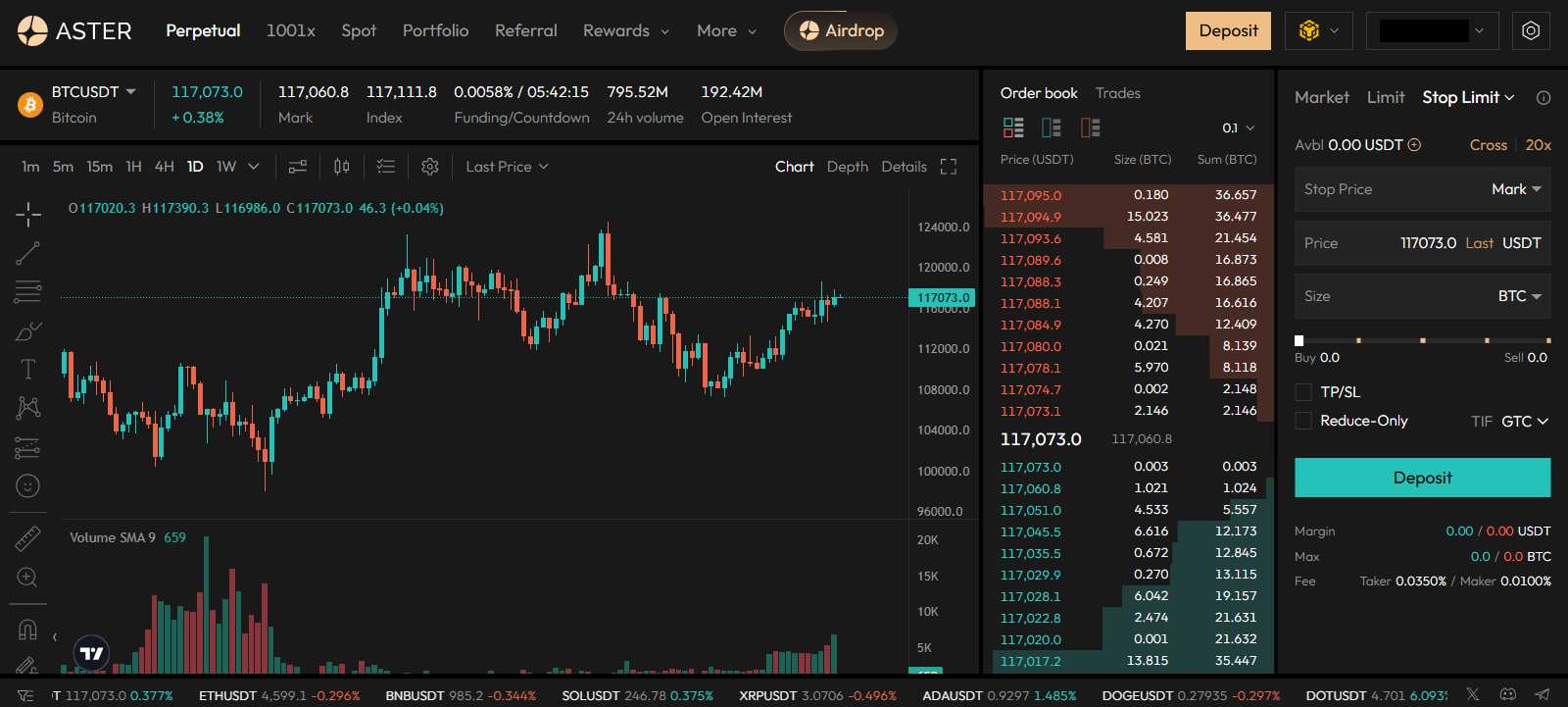
There are tradeoffs. No KYC and self-custody can be advantages, but they also place security of funds with the user. Audits and liquidation controls add confidence, although Aster does not have the same long operating history through multiple severe volatility cycles as older centralized competitors, which some traders may weigh as part of platform risk.
If you are planning entries around leverage, our trading profit simulator can help you size and manage positions more effectively before taking trades.
| 👍 Aster Pros | 👎 Aster Cons |
|---|---|
| ✅ Low trading fees | ❌ Interface has a steeper learning curve |
| ✅ Up to 1001x leverage available | ❌Wider spreads than some major CEXs |
| ✅ Strong volume for a perp DEX | ❌ Shorter operating history than legacy exchanges |
| ✅ Self-custody with no KYC access | |
| ✅ Hidden orders help reduce market impact | |
| ✅ Sub-accounts support hedging workflows |
8. WEEX
WEEX tends to attract traders looking for a balance between aggressive leverage and broad market access without moving into overly complex pro-level setups. It offers up to 400x leverage and supports 715 futures contracts, which is substantial coverage, especially at this ranking position. Access to commodities and stock-linked markets also adds variety beyond standard crypto perpetuals.

The cost structure is decent, though not among the cheapest. Fees sit at 0.02% maker and 0.08% taker, so frequent taker-heavy traders may notice the difference over time. Liquidity is more of a mixed picture. Average bid-ask spreads around 0.652% are materially wider than what stronger top-tier venues tend to offer, which can affect execution quality, particularly if you trade larger size or lower-volume contracts. That is one reason WEEX ranks below the top three despite the high leverage.
Where the platform does add value is usability. Demo trading is useful if you want to test strategies or get familiar with leverage mechanics before using real capital, and the interface allows a fair amount of layout customization. Margin options are limited to cross and isolated, while advanced order functionality is present but not particularly deep, so experienced derivatives traders may find the toolset somewhat narrower.
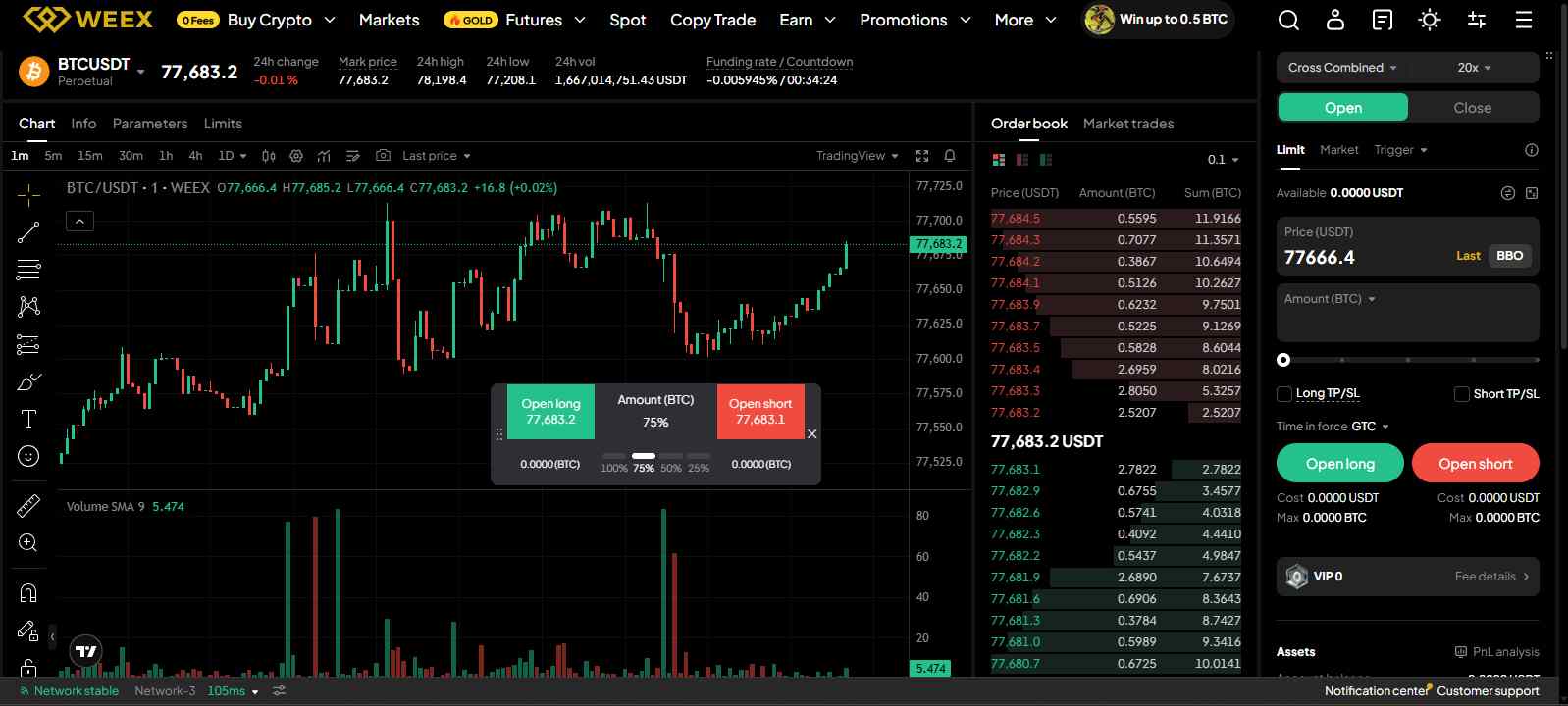
No mandatory KYC for many users, proof of reserves, and a protection fund add useful safeguards. For traders focused more on broad contract access and straightforward leveraged trading than advanced execution tooling, WEEX can still make sense, though its liquidity profile is something worth watching closely.
| 👍 WEEX Pros | 👎 WEEX Cons |
|---|---|
| ✅ Up to 400x leverage available | ❌ Liquidity is moderate, not top-tier |
| ✅ Access to stocks and commodities | ❌ Wider spreads can impact execution |
| ✅ Demo trading for strategy testing | ❌ Advanced order tools are limited |
| ✅ No mandatory KYC for many users | ❌ Only cross and isolated margin |
| ✅ Proof of reserves transparency | |
| ✅Protection fund adds risk coverage |
9. BloFin
BloFin makes sense in this ranking because it balances accessibility with enough derivatives depth to appeal beyond complete beginners. Among crypto futures trading platforms, it leans more toward usability than trying to compete on extreme leverage or institutional-style tooling, which is also why it can fit well among the best crypto leverage trading platforms for beginners.

Fees sit at 0.02% maker and 0.05% taker, which are competitive, while up to 150x leverage and 486 futures contracts give decent range for most traders. Futures volume around $515 million is respectable, though clearly below top-tier exchanges, and that is reflected in liquidity being more moderate than deep. For smaller to mid-sized positions that may not be a major issue, but larger traders may notice the difference.
One area where BloFin does well is usability. The interface is clean, customizable, and easier to navigate than many derivatives-heavy platforms, while still offering advanced order setups that more active traders would expect. Demo trading also adds value, particularly if you want to test execution or get comfortable with leverage before trading live capital.
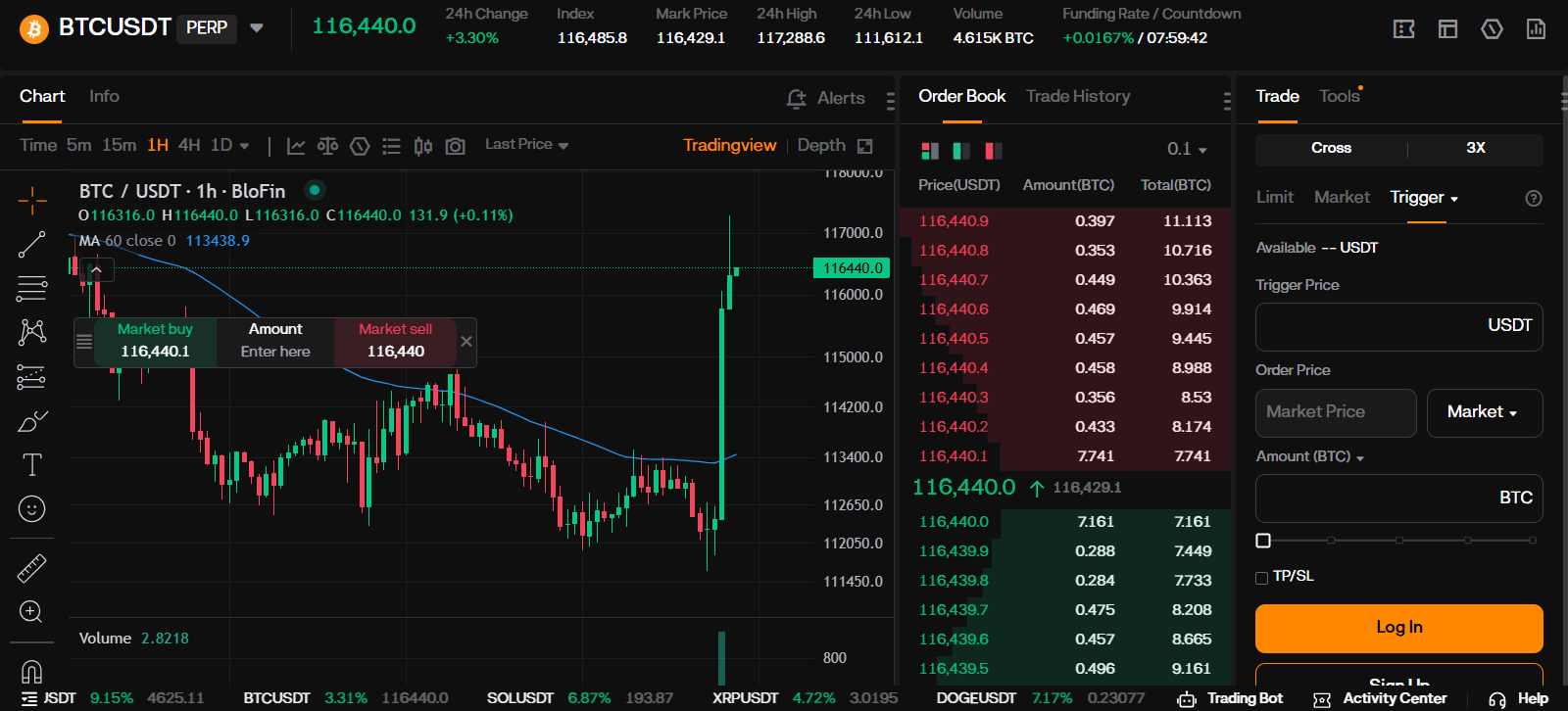
The tradeoff is that margin tools stay fairly standard, with isolated and cross mode only, and the broader derivatives stack is not as deep as higher-ranked exchanges. Still, proof of reserves and no mandatory KYC for many users add appeal, especially for traders prioritizing simplicity and access over institutional-style complexity.
| 👍 BloFin Pros | 👎 BloFin Cons |
|---|---|
| ✅Beginner-friendly trading interface | ❌ Moderate liquidity, not top-tier |
| ✅ Competitive futures trading fees | ❌ Only isolated and cross margin |
| ✅ Demo trading available | ❌ Fewer advanced risk tools |
| ✅Advanced order setups included | |
| ✅ Proof of reserves transparency | |
| ✅No mandatory KYC |
How to Select the Right Crypto Leverage Trading Platform
Choosing between crypto leverage trading platforms is not only about finding the highest leverage available. In practice, experienced traders often compare liquidity, funding costs, risk controls, and exchange security long before looking at headline leverage limits. Those factors usually have a bigger impact once real capital is involved.
Understand How Funding Rates Work
One thing many traders overlook when comparing crypto leverage trading exchanges is funding. Trading fees get attention, but funding can quietly affect returns, especially when positions stay open through multiple settlement intervals.
Funding rates are generally calculated as:
Interest rates are usually fixed by the trading platform.
The premium index is often the bigger driver and reflects the percentage difference between perpetual and spot price:
Most exchanges use a TWAP price to calculate the premium index, although each venue tweaks the formula through different weighting methods and risk controls, which is why funding rates can vary from exchange to exchange.
Funding is often settled every 8 hours, though intervals can differ. For traders holding positions longer, this matters.
A useful way to monitor funding rates, liquidations, open interest, and overall derivatives market conditions is through Coinglass.
Check Liquidity Beyond Volume
When evaluating the best platforms for crypto derivatives trading, reported volume alone rarely tells the full story.
It helps to look at:
- Order book depth
- Bid-ask spreads
- Slippage on larger orders
Deep liquidity often matters more than headline leverage, especially as position size increases.
Pay Attention to Risk Tools
Many traders focus on whether an exchange offers 100x or 200x, while ignoring the tools that help manage that risk.
Things worth checking include:
- Advanced order types
- Cross, isolated, or portfolio margin
- Hedge modes
- Risk controls and liquidation tools
Charting matters too. Most exchanges come equipped with TradingView integration, but using TradingView separately can still help if you monitor multiple charts, test strategies side by side, or manage entries across several markets.
And before taking a trade, it helps to run the setup through our risk-to-reward calculator at Cryptowinrate to model fees, breakeven levels, and possible outcomes before committing capital.
Bottom Line
The best crypto leverage trading platforms can increase market exposure and potentially amplify returns, though higher leverage also increases risk just as fast. That is why leverage alone is rarely what translates into consistent profits.
A healthier way many traders approach the market is by first learning how to trade, understanding technical analysis, and building strategies around discipline rather than relying on excessive leverage. In that sense, areas like day trading often become more strategy-driven and structured compared with purely chasing high-leverage positions.
That is also where choosing the right exchange matters. For traders focused on exchanges for day-trading, execution quality, fees, liquidity, and platform stability can matter as much as the strategy itself. The platform and the trading approach often work together.
FAQs
1. What is the safest leverage for crypto trading?
Leverage levels vary by strategy and risk tolerance, but many traders focus less on maximum leverage and more on position sizing and risk management. Higher leverage increases both upside and downside exposure.
2. How do funding rates affect leveraged crypto trades?
Funding rates are recurring payments between long and short traders used to keep perpetual prices aligned with spot markets. Positive or negative funding can increase holding costs, especially if positions remain open across multiple funding intervals.
3. Is it okay to use 100x leverage as a beginner?
100x leverage increases exposure very quickly and also raises liquidation risk. Many traders focus first on understanding position sizing and risk before using very high leverage.
4. Why do many traders lose money?
Common reasons include overleveraging, poor risk management, emotional decisions, and trading without a tested strategy. Fees and funding costs can also affect performance over time.
5. Is 1:500 leverage good for a beginner?
1:500 leverage offers very high exposure and also very high risk. For newer traders, understanding how leverage affects liquidation risk is generally more important than using maximum leverage available.