


- •Fees, liquidity, and spread directly impact profitability, even small differences add up over time.
- •Most day traders rely on market orders, making taker fees a critical cost factor.
- •Bybit remains the strongest overall pick, while BloFin, WEEX, and Binance stand out for derivatives access, volume, and execution quality.
- •High leverage can improve capital efficiency but requires careful risk management in volatile markets.
- •Not all exchanges perform equally, real trading conditions matter more than listed features.
There’s a lot of money to be made day trading cryptocurrencies, but profitability depends on a few key factors that many traders overlook. Day traders care about a few things: fees, leverage, liquidity, spread, and execution speed. Even small differences in these areas can have a noticeable impact over time. Being a day trader myself, I’ve tested over 100 platforms in the past 8 years. I’ve seen everything from high fees and poor liquidity to inconsistent execution during volatility. To cut through the noise, this guide focuses on the best crypto exchanges for day trading and how they perform where it matters most.
Top 9 Crypto Exchanges for Day Trading
Choosing the right platform can directly impact your performance, especially when you’re trading frequently. Not every exchange is built for speed, liquidity, or cost efficiency.
To help narrow things down, we’ve ranked the best crypto exchanges for day trading based on real trading conditions, not just features on paper. These crypto day trading exchanges were evaluated across fees, leverage, liquidity, execution speed, and overall trading experience.
1. Bybit
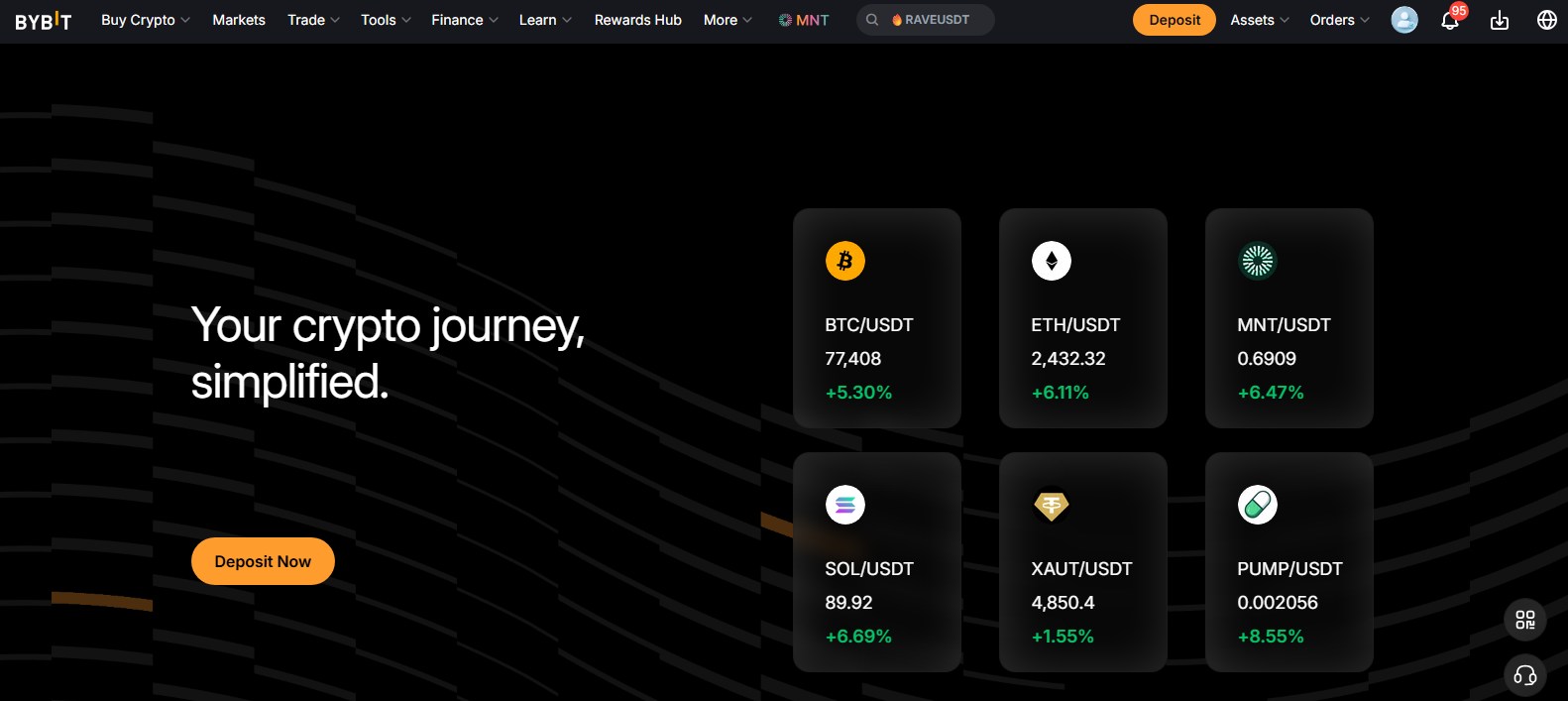
Founded in 2018, Bybit quickly rose to the top of the crypto space and is now one of the largest crypto trading platforms in the world, serving over 30 million users globally. With fair fees, great liquidity, and one of the most user-friendly trading interfaces, Bybit remains one of the best crypto exchanges for day trading and a popular choice among crypto day trading exchanges.
Fees
The fees on Bybit’s spot market are 0.1% for makers and takers. For day traders, the futures fees are slightly better than average. Bybit charges 0.02% maker and 0.055% taker fees, which is competitive but not the lowest.
Keep in mind that most orders are taker orders (market orders), so the taker fee matters more in practice.
Bybit also offers fee discounts if you pay using platform tokens, with up to 25% reduction on spot fees and around 10% on futures fees if you’re holding MNT token and use it pay for trading fees.
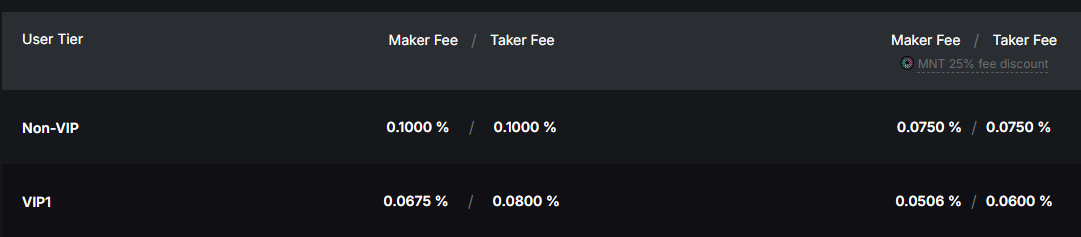
Based on your monthly trading volume, you can reduce your fees further. At higher VIP levels (such as Pro 5), traders can access 0.00% maker and as low as 0.018% taker fees on major pairs. Compared to Binance, the base fees are higher, but the requirements to unlock lower fees are more realistic.
Leverage
As Bybit is a professional derivatives trading platform that focuses on day trading, you get to enjoy leverage up to 100x on major pairs such as BTC and ETH.
Just like every serious exchange, Bybit supports cross and isolated margin mode as well as one-way and hedge mode. One great thing about Bybit is the feature of a unified trading account where you can offset losses with funds in other Bybit wallets to avoid liquidations and manage risk. Yet again, we highly recommend staying away from it if you are new. However, for advanced traders, this is a great tool.
Volume, Spread, and Liquidity
With over $20 billion in daily trading volume, Bybit consistently ranks among the top derivatives platforms.
In terms of liquidity, Bybit remains one of the strongest exchanges, with a CoinGecko liquidity score of 4 and an average bid-ask spread of around 0.325%.
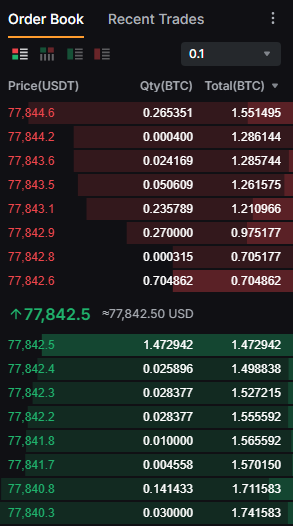
The Bitcoin spread on Bybit is around 10 cents on both spot and futures markets, which is within the expected range for top-tier exchanges.
Supported Coins
Bybit has significantly expanded its listings over time. You can now trade around 728 spot assets and over 708 futures contracts.
In addition to crypto, Bybit also offers exposure to stocks and forex-based trading products, making it one of the platforms that pushed beyond pure crypto trading early on. At the same time, it still focuses mainly on major pairs, which is what most day traders care about.
Bybit also caters to a global audience with region-specific features, including a Bybit Islamic Account that allows users to trade in line with Islamic finance principles.
Trading Interface
Bybit is known for having an extremely user-friendly interface. This is great, especially for new traders as the navigation is super simple.
The website works relatively smoothly, but when comparing exchanges side by side, we noticed that it is slightly slower than Binance. Still, Bybit performs well overall and remains reliable for day trading.
The mobile app from Bybit is one of the fastest in the crypto space that we tested so far. It runs extremely well on iOS and Android devices. So if you will be trading a lot on the go, Bybit is a strong option.
Order Types
Bybit offers a wide range of order types, making it suitable for both beginners and advanced traders. You can also add partial TP/SL prices, which is something we really like.
- Long/Short
- Limit and Market orders
- Conditional orders
- Chase Limit
- Scaled Order
- TWAP
- Iceberg orders
- Webhook Signal Trading
- Trailing stop
- OCO
- Post-only
- Single TP/SL
- Multiple TP/SL
- Conditional: GTC, IOC, FOK
2. BloFin
BloFin is one of the better options for secure derivatives trading, especially for day traders who want a fast interface, copy trading tools, strong futures coverage, and proof-of-reserves transparency. The platform is still newer compared to Bybit, Binance, or Kraken, but it has quickly gained attention among active traders because it focuses on execution, security, and perpetual markets.
For day traders, BloFin makes the most sense if you are trading perpetual contracts rather than only using the spot market. The exchange supports 502 futures contracts across USDT-M, USDC-M, and COIN-M markets, giving traders different ways to manage margin and trade major crypto pairs as well as altcoins.
Security is also one of BloFin’s stronger points. The exchange has no known hack history and provides proof of reserves, which gives users more transparency when checking how customer assets are backed. BloFin also highlights zero-slippage execution, which can be useful for active traders who want more predictable fills during fast market moves.
Fees
On the spot market, BloFin charges 0.1% maker and 0.1% taker fees. This is the standard fee level across many crypto exchanges and is not the main reason BloFin ranks this high.
The futures fees are more relevant for day traders. BloFin charges 0.02% maker and 0.06% taker fees on futures trading. Since many day traders use market orders to enter and exit quickly, the taker fee matters more in real trading conditions.

At 0.06% taker, BloFin is competitive with larger exchanges and keeps trading costs reasonable for active futures traders.
BloFin also offers VIP fee tiers, so traders with higher monthly volume can reduce their fees further.
Leverage
BloFin offers up to 150x leverage on futures trading. This gives traders enough flexibility for short-term strategies, but leverage should not be the main reason to use the platform.
For day trading, execution quality, spread, fees, and risk control matter more than the maximum leverage number. Most traders will not need to use the full 150x, especially during volatile market conditions.
BloFin supports different futures contract types, including USDT-M, USDC-M, and COIN-M contracts. This gives traders more flexibility in how they margin and settle positions.
Volume, Spread, and Liquidity
BloFin records more than $2 billion in cumulative daily trading volume, which makes it a serious option for active derivatives traders.
Liquidity is moderate overall, with an average bid-ask spread of around 0.549%. This means BloFin is not as deep as Bybit or Binance across the full market, but it still performs well on active pairs, especially in the perpetual market.
The BTC spot spread is around $1, which is higher than what you usually see on top-tier spot exchanges. Because of this, BloFin may not be the strongest choice if your main focus is spot day trading.
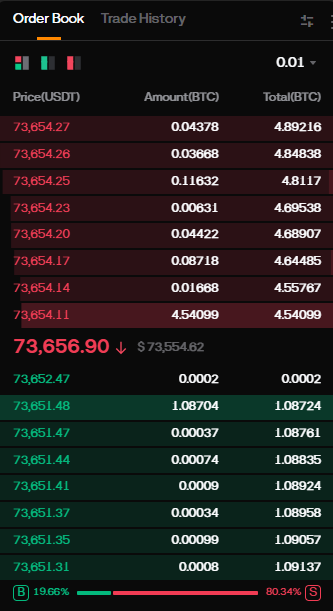
The perpetual order book is much better. On BTC perpetuals, the spread is around 10 cents, which is suitable for day traders who need tighter execution on short-term trades.
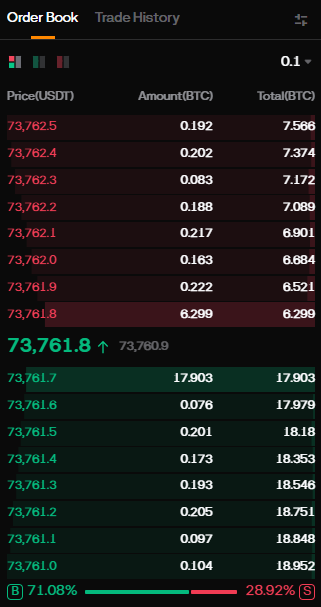
So, BloFin’s real strength is not spot trading. It is better suited for derivatives day trading, where its fees, contract coverage, copy trading tools, and execution features are more relevant.
Supported Coins
BloFin supports 521 spot assets and 502 futures contracts. This gives traders access to a large selection of major coins, active altcoins, and futures markets.
The futures contracts are available across USDT-M, USDC-M, and COIN-M markets. This is useful for day traders who want more than one margin type instead of only trading USDT-margined contracts.
Trading Interface
BloFin has a clean and fast trading interface, which is important for day trading. The platform is easy to understand, and the layout should feel familiar if you have used exchanges like Bybit, or Binance before.
The trading screen includes the main tools active traders need, including charts, order book data, recent trades, open positions, and quick order controls. It does not feel too crowded, which makes it easier to follow price movement and manage trades during active sessions.
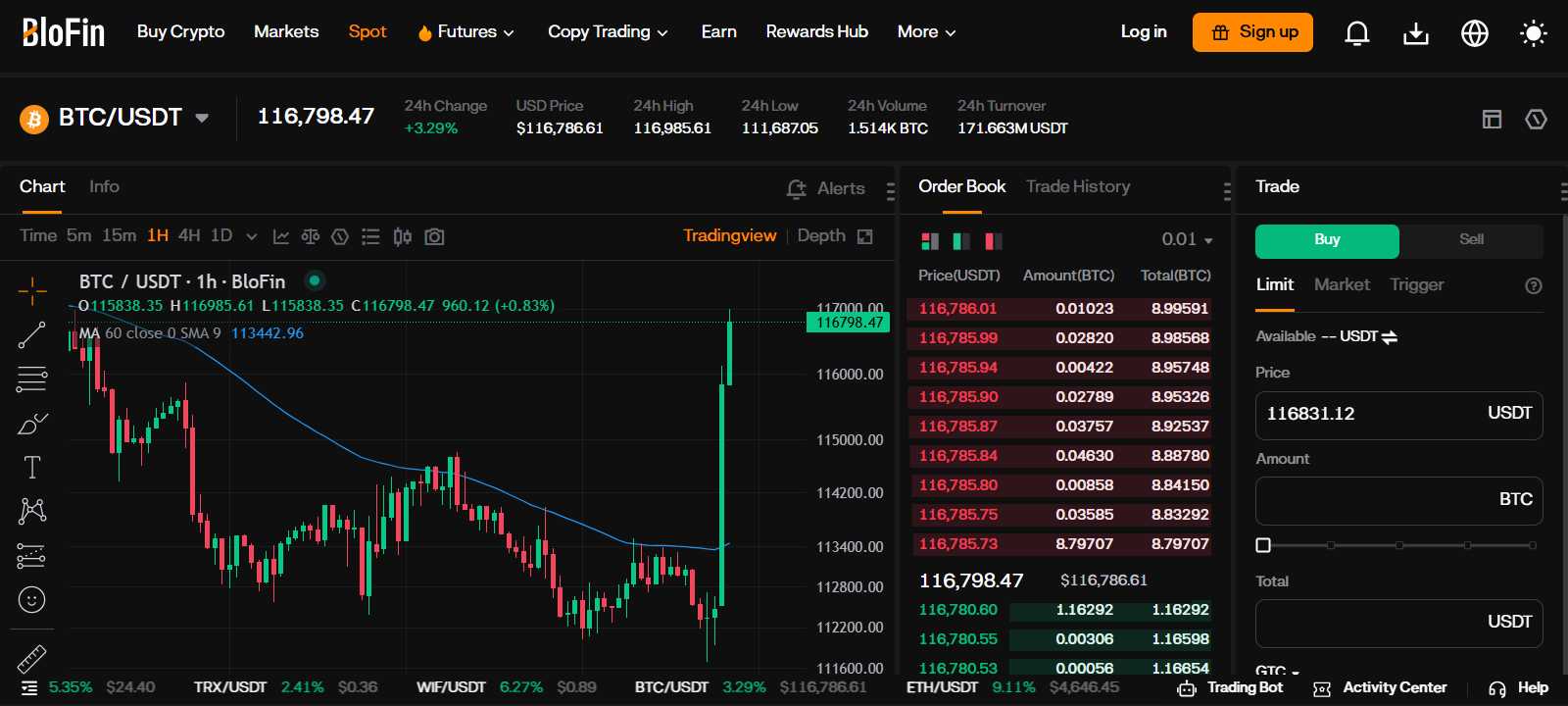
BloFin also supports copy trading, which can be useful for users who want to follow experienced traders or study how others manage entries, exits, and risk. This does not replace having your own strategy, but it adds another layer for traders who want to observe live trading behavior.
The mobile app is available on iOS and Android and gives access to both spot and futures trading. Overall, BloFin’s interface is one of the reasons it works well for day traders who want a fast platform without too much clutter.
Order Types
BloFin supports the main order types required for day trading, along with several advanced execution tools.
- Long/Short
- Limit and Market orders
- Scaled Order
- Trigger Orders
- TP/SL
- Trailing Stop
- TWAP
- Conditional: GTC, Post-only, IOC, FOK
3. WEEX
WEEX is better understood as a derivatives-first exchange for traders who want fast market access, optional KYC, copy trading, and exposure to newly listed coins. It has become popular among derivatives traders because it combines a large futures market with simple onboarding and a trading interface that does not feel difficult to use.

For day trading, the main appeal is its futures market. WEEX supports 731 futures contracts, mainly through USDT-M perpetuals, and also offers tokenized stock perpetuals for traders who want more than standard crypto pairs. The platform is also known for listing new projects and meme coins quickly, which can be useful for traders looking for short-term volatility.
WEEX also has a solid security record. The exchange has no known hack history, publishes proof of reserves, and carries a trust score of 8. This gives it a stronger trust profile than many smaller derivatives exchanges.
Fees
On the spot market, WEEX charges 0.1% maker and 0.1% taker fees. This is the standard fee level across most crypto exchanges.
The futures fee structure is not as balanced. WEEX charges 0.02% maker fees, which is competitive, but the taker fee is higher at 0.08%. This is the main cost-related drawback for day traders.
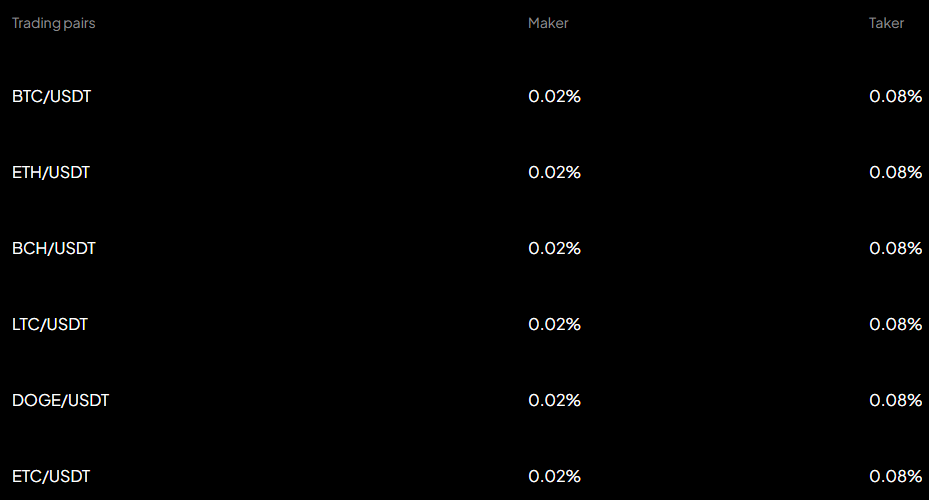
Since many day traders use market orders to enter and exit quickly, the taker fee matters more in practice. So even though WEEX offers strong futures activity and tight spreads, traders who rely heavily on market orders should keep the higher taker fee in mind.
WEEX also offers fee discounts through its WXT token, which can help lower trading costs for users who hold or use the token for fee reduction.
Leverage
WEEX offers up to 400x leverage on selected futures pairs. This is much higher than what most crypto exchanges offer.
That said, leverage should be treated carefully. The full 400x is not practical for most day traders because liquidation risk becomes extremely high. The more useful point is that WEEX gives traders enough flexibility to adjust position size based on their risk level and strategy.
The platform mainly focuses on USDT-M perpetual contracts, which are familiar to most derivatives traders and easier to manage compared to coin-margined contracts.
Volume, Spread, and Liquidity
WEEX records more than $16.2 billion in cumulative daily trading volume, which shows strong activity across the platform.
Liquidity is moderate overall, with an average bid-ask spread of around 0.678%. This means WEEX is not as deep as Binance or Bybit across the full market, but it can still work well for active traders on major futures pairs.
The spot spread can be up to around 5 cents, which is reasonable for most traders on active pairs.
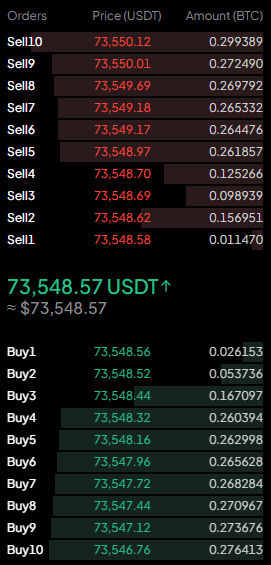
The futures spread is much tighter, going as low as around 1 cent on major perpetual markets.
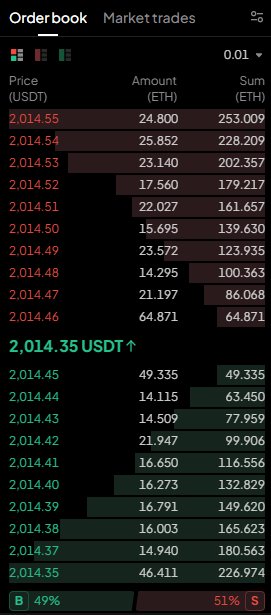
This is one of the reasons WEEX can still make sense for day trading despite its higher futures taker fee. The exchange may cost more on taker orders, but tight futures spreads and strong volume can still support fast entries and exits on active contracts.
Supported Coins
WEEX supports 731 futures contracts, giving traders access to a large selection of perpetual markets. The exchange is also quick to list new projects and meme coins, which can appeal to day traders who prefer high-volatility markets.
The main futures product is USDT-M perpetual contracts. WEEX also offers tokenized stock perpetuals, giving traders exposure to stock-based markets through a perpetual contract format.
This makes WEEX more suitable for traders who want many futures markets rather than those who only want deep spot liquidity.
Trading Interface
WEEX has a simple and fast trading interface. It gives traders the main tools they need without making the platform feel crowded.
The trading screen includes charts, order book data, open positions, recent trades, and order controls in a layout that is easy to follow. For day traders, this matters because a slower or confusing interface can affect execution during active market sessions.
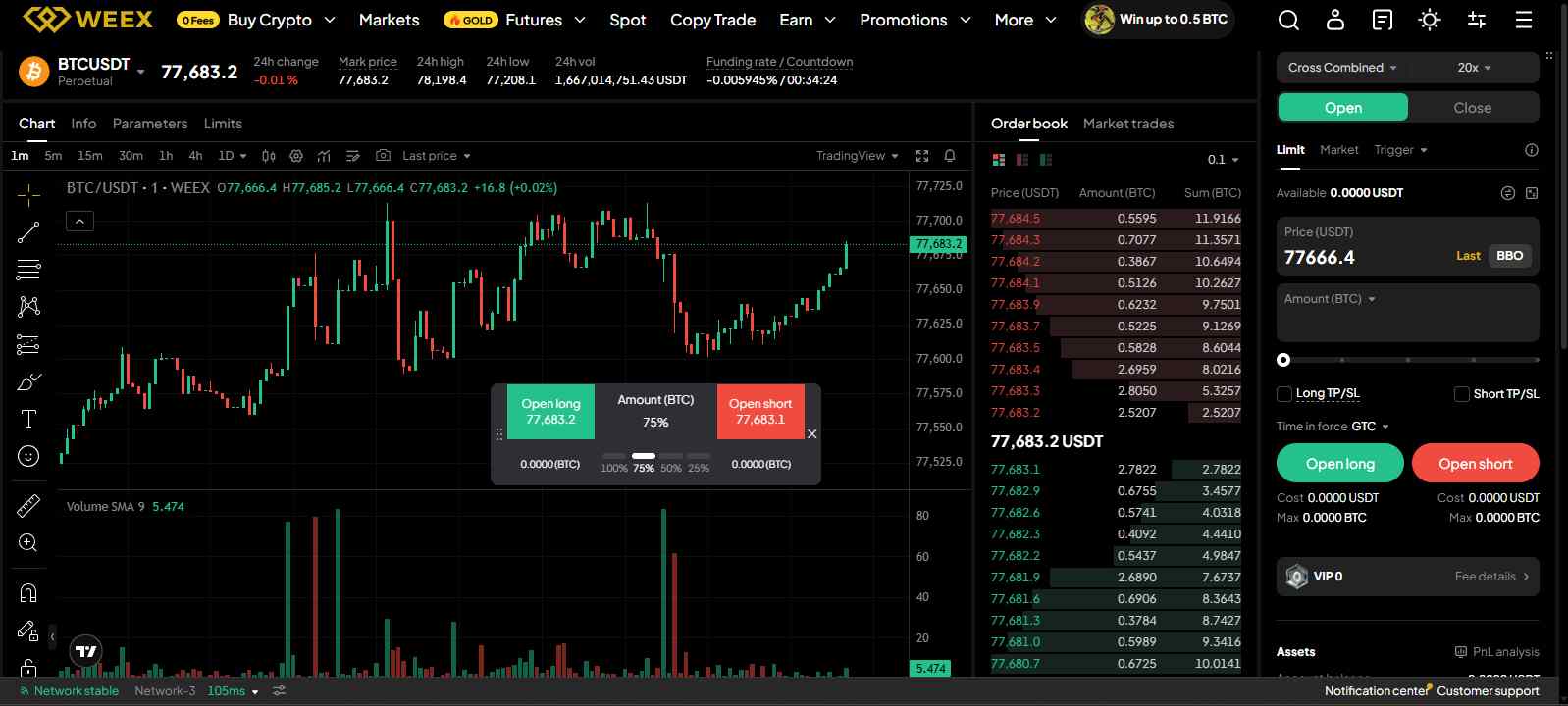
Copy trading is also available, which allows users to follow experienced traders or study how other traders manage their positions. Demo trading is another useful feature, especially for beginners who want to test strategies before using real funds.
WEEX also offers an AI trading kit. This can help traders review market conditions and test ideas, but it should not replace proper risk management or independent trade planning.
Order Types
WEEX supports the basic order types needed for day trading, but the selection is more limited.
- Limit
- Market
- Trigger
- Post-only
- Trailing Stop
- Conditional: FOK, IOC, GTC, Post-only
4. Binance
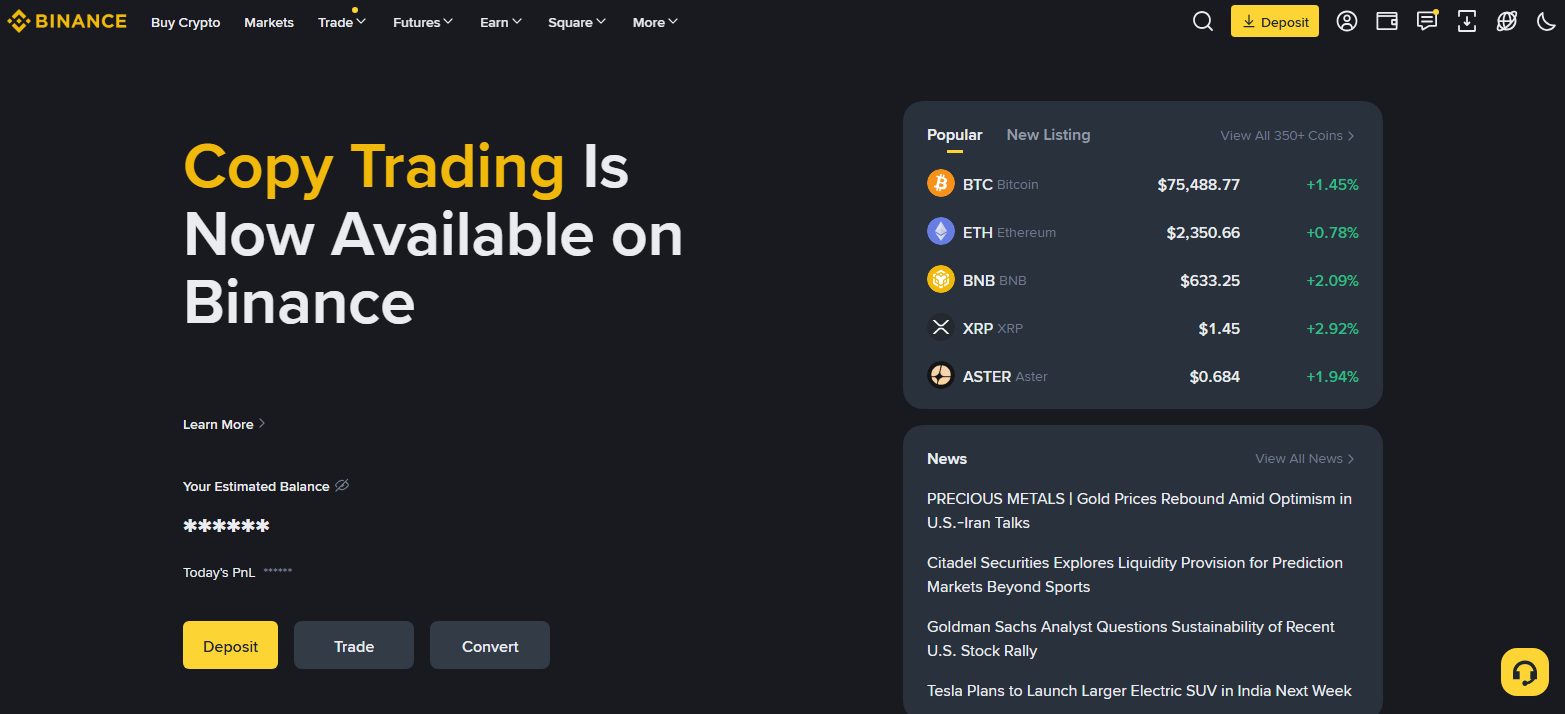
Binance, the largest crypto exchange launched in 2017, remains one of the best crypto trading platforms for day traders. With low fees, a strong range of supported coins, high liquidity, and a comprehensive interface, it is no surprise that Binance is a top choice for day traders.
With over 286 million registered users worldwide and global operations including Binance US, the platform continues to dominate both spot and derivatives trading.
Fees
On the spot market, Binance charges a flat fee of 0.1% for makers and takers, which is the industry standard. On the futures market, Binance has some of the lowest rates in the space with 0.02% maker and 0.05% taker fees.
One thing to note is that you can reduce your spot fees by 25% and futures fees by 10% if you are holding BNB and turn on the BNB fee deduction feature.
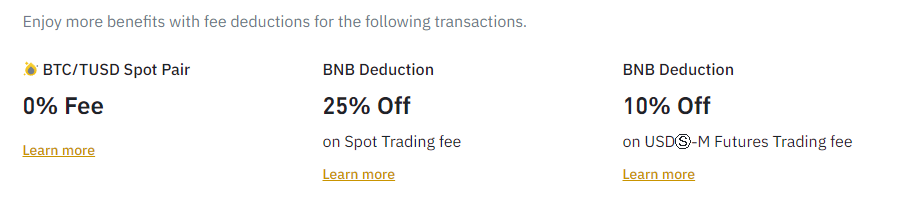
On top of that, Binance now offers FDUSD trading pairs with 0% maker fees, which can further reduce costs for active traders.
Based on your monthly trading volume, you can reduce your fees to very low levels, however, this requires extremely high volume. So if you are a “whale” Binance can become cheaper at the highest VIP level. But getting there requires massive monthly trading volume.

Leverage
The leverage on Binance goes up to 125x on major cryptos such as BTC and ETH when traded against USDT. On pairs with less volume and liquidity such as KAVA, the highest available leverage is lower.
Binance also offers a Unified account, called Multi-Asset Mode, which is useful for advanced traders. With the Multi-Asset Mode, you can offset unrealized losses with unrealized gains and assets in other margin positions.
Volume, Spread, and Liquidity
It is no surprise that Binance has some of the best liquidity in the crypto space. You can easily open large positions on major pairs such as BTC/USDT or ETH/USDT without having a big impact on the price.
Binance currently records over $60 billion in daily trading volume, making it the most active exchange globally.
On the spot market, Binance ranks among the highest in liquidity scores, with a CoinGecko liquidity score of 4 and an average bid-ask spread of around 0.236%.
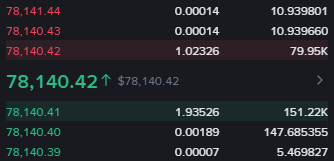
On the Binance spot market, the spread is typically around 1 cent on major pairs.
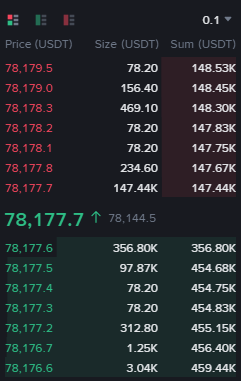
The futures spread on Binance is around 10 cents on BTC pairs.
Supported Coins
As the biggest crypto exchange in the world, Binance still carefully selects the projects that it lists. On the spot market, Binance now supports around 440 cryptocurrencies, while on the futures market, you can trade over 661 contracts.
While Binance might not list as many coins as some other platforms, you will still find all major cryptocurrencies with strong liquidity. In addition to crypto, Binance also offers exposure to NFTs and selected TradFi-style products, expanding its ecosystem beyond just spot and futures trading.
Trading Interface
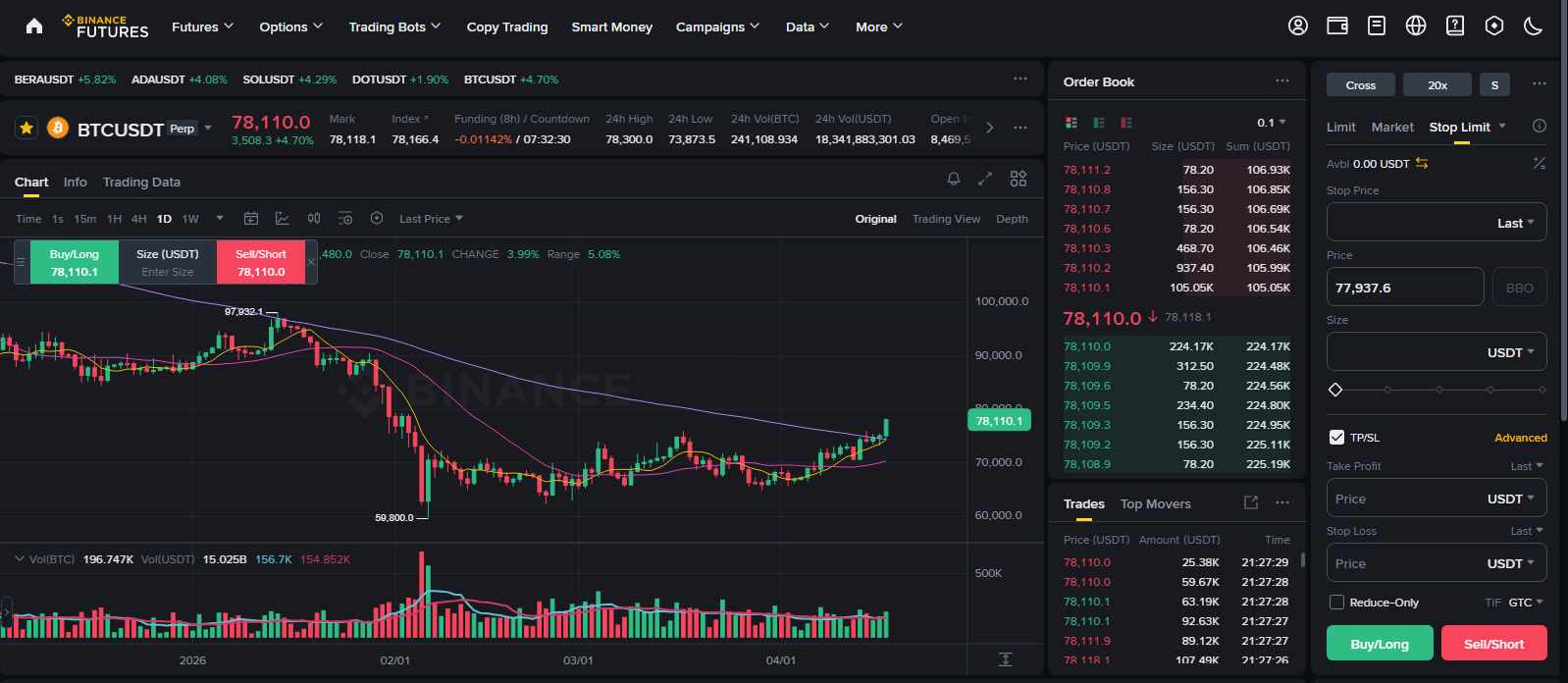
The interface of Binance is unfortunately not the best, however, it is one of the most comprehensive ones and Binance offers some of the most advanced trading features such as TWAP and scaled orders.
Other than that, the Binance web interface is fairly stable and we did not encounter any issues with it. Binance’s trading interface remains one of the benchmarks other top-tier exchanges try to match, particularly on the derivatives side. Its layout, charting tools, order controls, and workspace customization make it well suited for active traders managing multiple markets.
Having a look at Binance’s mobile application, we must say that it can be slow at times of high volatility. The desktop website and application are much more reliable for active trading.
Order Types
This is where Binance is the market leader. Binance has one of the most advanced sets of order types among crypto exchanges.
- Long/Short
- Limit and Market orders
- Stop-Limit
- Stop Market
- Conditional orders
- Trailing stop
- Post only
- Single Limit TP/SL
- TWAP
- Scaled Order
- OCO
- Conditional: GTC, IOC, FOK, Reduce Only
5. Bitunix
Bitunix is a practical option for day traders who want optional KYC access, futures trading, copy trading, and a platform that keeps the trading experience simple. Launched in 2021, the exchange has grown steadily and now handles more than $5 billion in cumulative daily trading volume.
The platform is not as large as Binance or Bybit, but it still offers enough market coverage for active traders. Bitunix supports 397 spot assets and 606 futures contracts, with contracts available across USDT-M, USDC-M, and COIN-M markets.
Security is also worth mentioning. Bitunix has a trust score of 8, publishes proof of reserves, and gives users more transparency around customer assets.
Fees
Bitunix has competitive spot trading fees compared to many exchanges in this list. On the spot market, it charges 0.08% maker and 0.1% taker fees. The maker fee is lower than the standard 0.1% rate, which can help traders who place limit orders.
On the futures market, Bitunix charges 0.02% maker and 0.06% taker fees. The maker fee is competitive, while the taker fee is closer to the industry average.
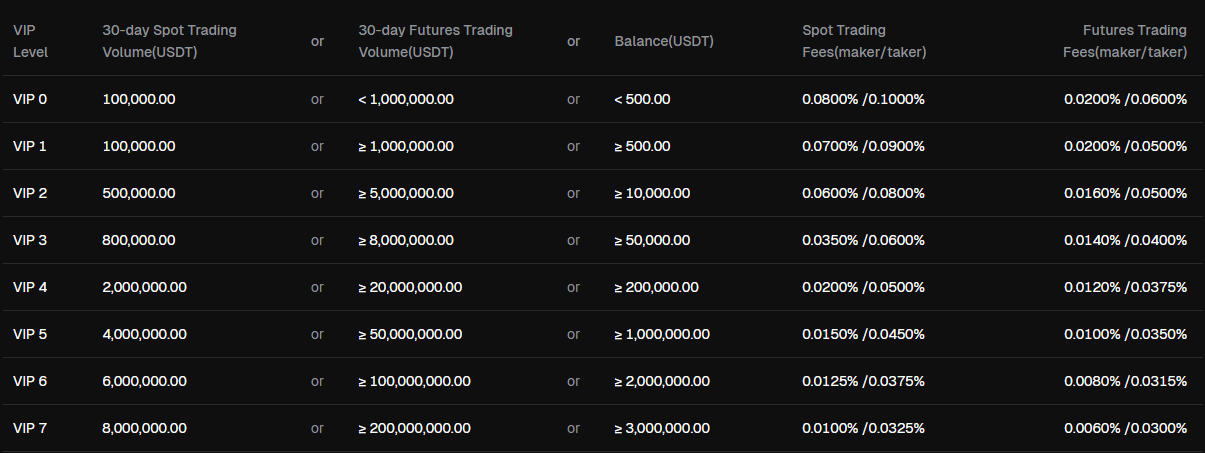
For day traders, the taker fee is important because market orders are often used for faster entries and exits. Bitunix is not the cheapest futures exchange for taker orders, but the fee structure is still reasonable for active traders.
Fees can also be reduced through volume-based discounts, so traders with higher monthly volume may be able to lower their trading costs.
Leverage
Bitunix offers up to 200x leverage on futures trading. This gives traders plenty of flexibility when managing short-term positions.
Still, leverage should be used carefully. Most day traders do not need to use the full 200x because liquidation risk increases quickly at higher levels.
The more useful part is that Bitunix supports multiple futures contract types, including USDT-M, USDC-M, and COIN-M contracts. This gives traders more choice in how they manage margin, collateral, and settlement.
Volume, Spread, and Liquidity
Bitunix records more than $5 billion in cumulative daily trading volume, which makes it active enough for day traders who focus on major pairs and popular futures markets.
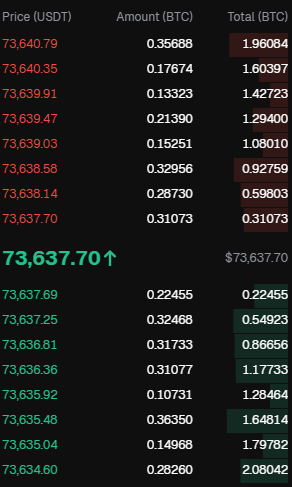
Liquidity is moderate, with a tight average bid-ask spread of around 0.257%. This is one of the stronger points for Bitunix, especially compared to some mid-sized exchanges.
On the BTC spot market, the spread is around 10 cents.
The futures order book is similar, with around 10 cents spread on BTC perpetual contracts.
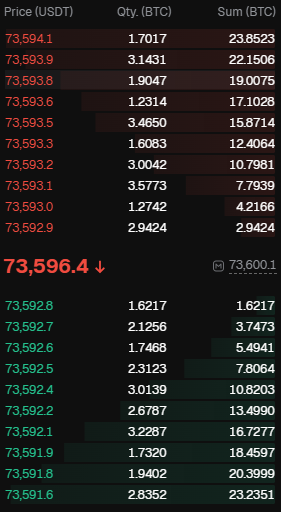
This makes Bitunix fairly reliable for active trading on major pairs. However, traders should still check liquidity on the exact markets they trade, because smaller altcoins can have thinner order books and wider spreads during volatile conditions.
Supported Coins
Bitunix supports 397 spot assets and 606 futures contracts. This gives traders a strong selection across both spot and derivatives markets.
The futures side is the more important part for day trading. Bitunix offers contracts across COIN-M, USDT-M, and USDC-M markets, which gives active traders more flexibility than platforms that only support USDT-margined contracts.
Copy trading is also available, which can be useful for users who want to follow experienced traders or study how others manage entries, exits, and position sizing.
Trading Interface
Bitunix keeps the trading experience simple, which can be useful for traders who do not want an overly complex platform. The interface gives access to charts, order books, positions, and order placement without too much clutter.
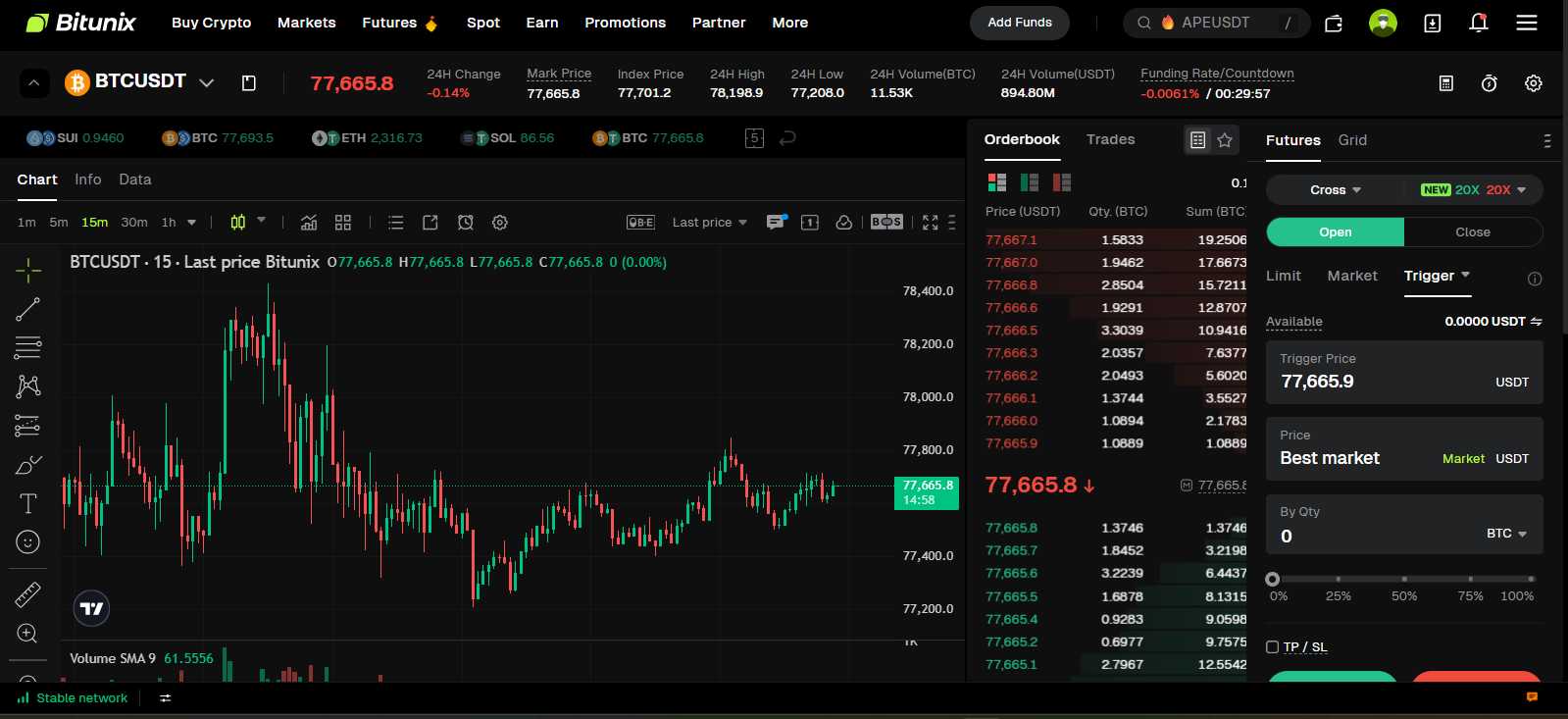
For day trading, this simplicity can be a positive because traders need to move quickly between charts, orders, and position management. The platform also supports copy trading, which adds another layer for users who want to observe or follow active traders.
However, Bitunix does not offer the same level of advanced order control as exchanges like Binance, Bybit, or OKX. The order types are more limited, so traders who rely on complex execution tools may find it less complete.
Order Types
Bitunix supports the basic order types needed for day trading, along with a few advanced tools for managing risk and execution.
- Long/Short
- Limit orders
- Market orders
- Fixed Risk
- Scaled Order
- Trailing Stop
- Trigger Orders
- Conditional: FOK, IOC, GTC, Post-only
6. BingX
On rank 6 we have a fairly hidden gem exchange. BingX is a platform that focuses on derivatives crypto trading as well as copy trading. They also call themselves the first “social exchange” due to the large copy trader network.
With over 5 million users globally, BingX has grown steadily and is now considered one of the more accessible cryptocurrency exchanges for day trading, especially for users interested in copy trading and derivatives.
Fees
On the spot market, you pay a flat fee of 0.1% for maker and taker orders, which is the industry standard.
With 0.02% maker and 0.05% taker fees on the perpetual futures market, BingX slightly beats the average fee rate of 0.02%/0.06%.
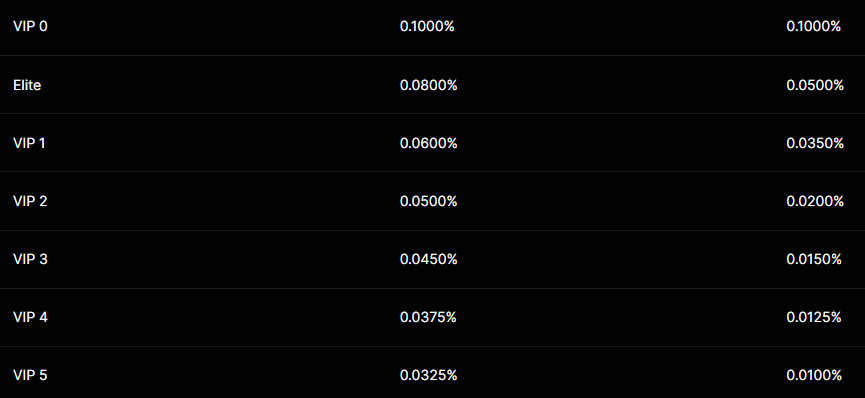
Based on your monthly trading volume, you can reach higher VIP levels and reduce your fees further. At VIP 5, fees can go as low as 0.01% maker and 0.0325% taker, which is competitive for active traders.
Leverage
As a professional derivatives trading platform, BingX offers leverage of up to 150x on selected pairs like BTC and ETH. On most other pairs, leverage ranges from 10–50x depending on the asset.
Furthermore, you can long and short at the same time with the BingX hedge mode and switch between cross and isolated margin mode.
Unfortunately, we could not find any information about a unified trading account on BingX. However, this feature is mainly relevant for more advanced traders.
Volume, Spread, and Liquidity
With close to $10 billion traded daily, BingX is one of the larger exchanges in the market.
The platform has a CoinGecko liquidity score of 3, with an average bid-ask spread of around 1.018%. Liquidity is strong on major pairs, but weaker on smaller or newly listed assets.
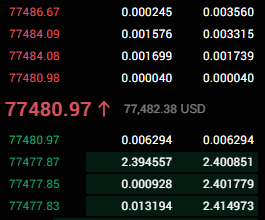
The spread on BingX spot market has improved over time. On the BTC/USDT pair, the spread is usually around 2–10 cents, depending on market conditions.
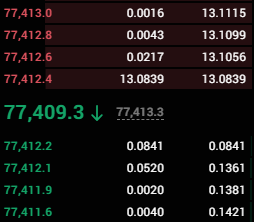
On the derivatives market, the spread is around 20 cents on BTC pairs, making it suitable for active day traders.
Supported Coins
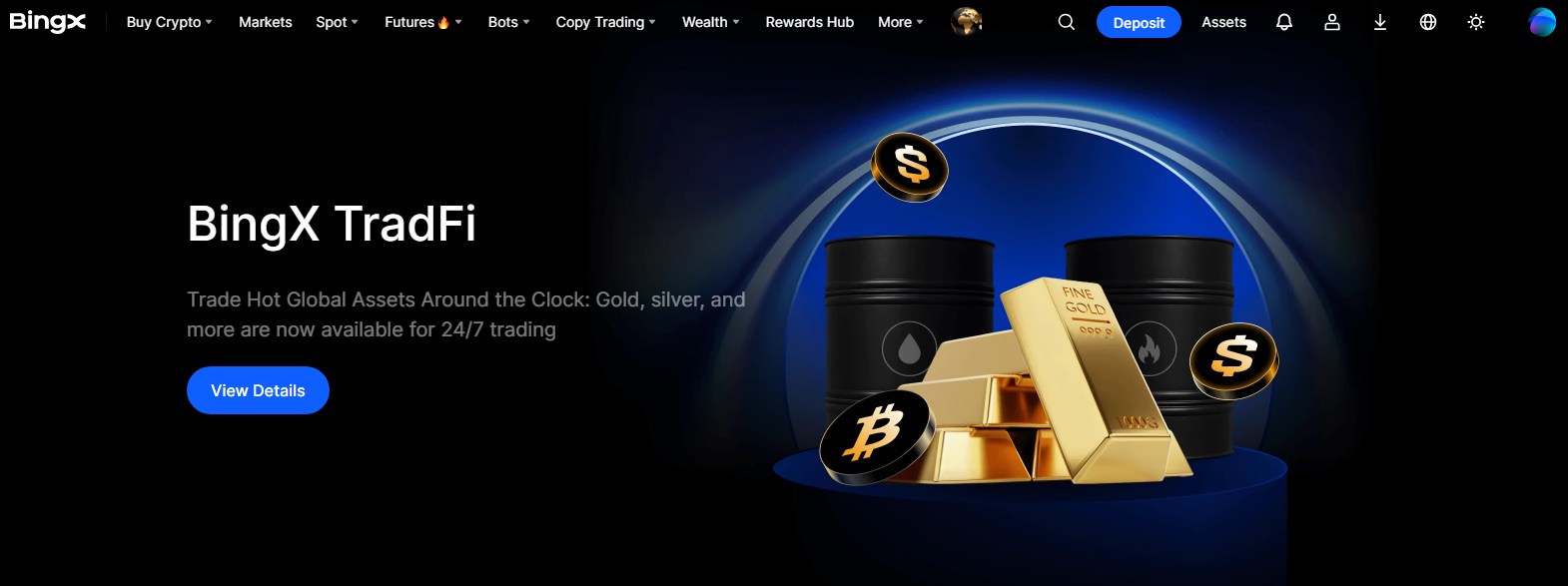
BingX has expanded its asset offerings significantly. The platform now supports around 837 spot assets and over 600+ futures contracts. However, there is one key area where BingX stands out. The platform does not only offer cryptocurrencies but also forex, indices, commodities, and stock trading pairs.
Some of the TradFi assets on BingX include (but are not limited to): Gold, Silver, Crude Oil, S&P 500, NASDAQ, Tesla, Google, Amazon, EUR, USD, GBP, CAD and more. So if you plan to not only trade cryptos but also TradFi assets, BingX is a strong option.
Trading Interface
As for the web trading interface, BingX did a great job. It is well designed and runs smoothly without interruptions or slow loading times. It is simple to navigate and displays all the important trading information clearly.
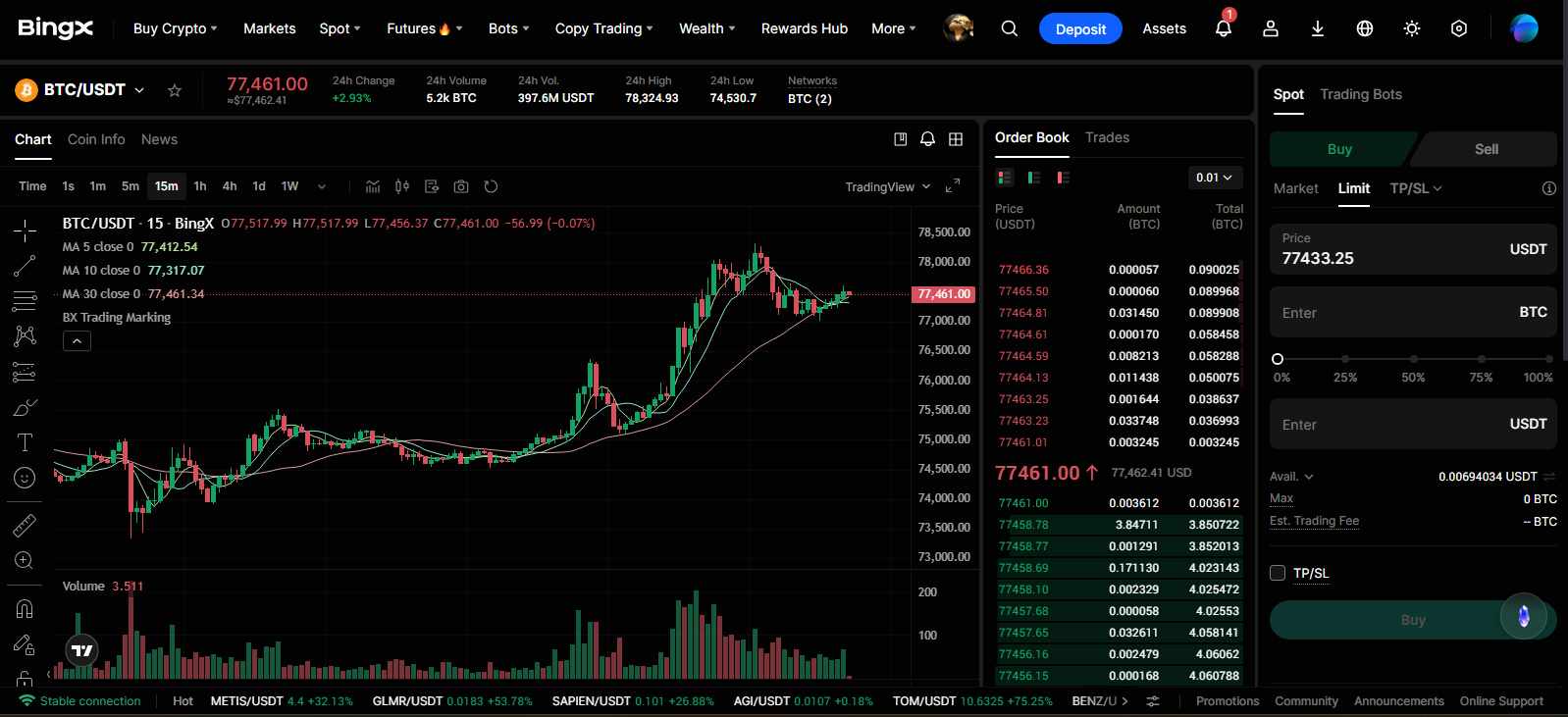
The trading interface is also quite advanced, giving traders the option to load multiple charts at once, which is useful for those working with multiple setups or monitoring different pairs simultaneously.
The mobile app of BingX is available for Android and iOS devices and performs similarly well, making it a reliable option for trading on the go.
Order Types
BingX supports a wide range of order types suitable for both basic and advanced trading strategies.
- Long/Short
- Limit and Market orders
- Trigger Orders
- TP/SL
- OCO
- Trailing Stop
- Post-only
- TWAP
- Scaled Order
- Chase Limit
- Conditional: GTC, IOC, FOK
7. Kraken
Kraken is one of the oldest cryptocurrency trading platforms and most crypto OGs have used it for day trading in the past. While Kraken is not the number 1 crypto exchange anymore, it is still one of the more reliable options in the market and remains among the best crypto trading platforms for day trading for users who prioritize security.
Kraken Pro is also one of the top choices for day traders from the US looking for a regulated and licensed platform. With millions of users across 170+ countries, Kraken continues to maintain a strong presence, especially among traders who prioritize security and compliance.
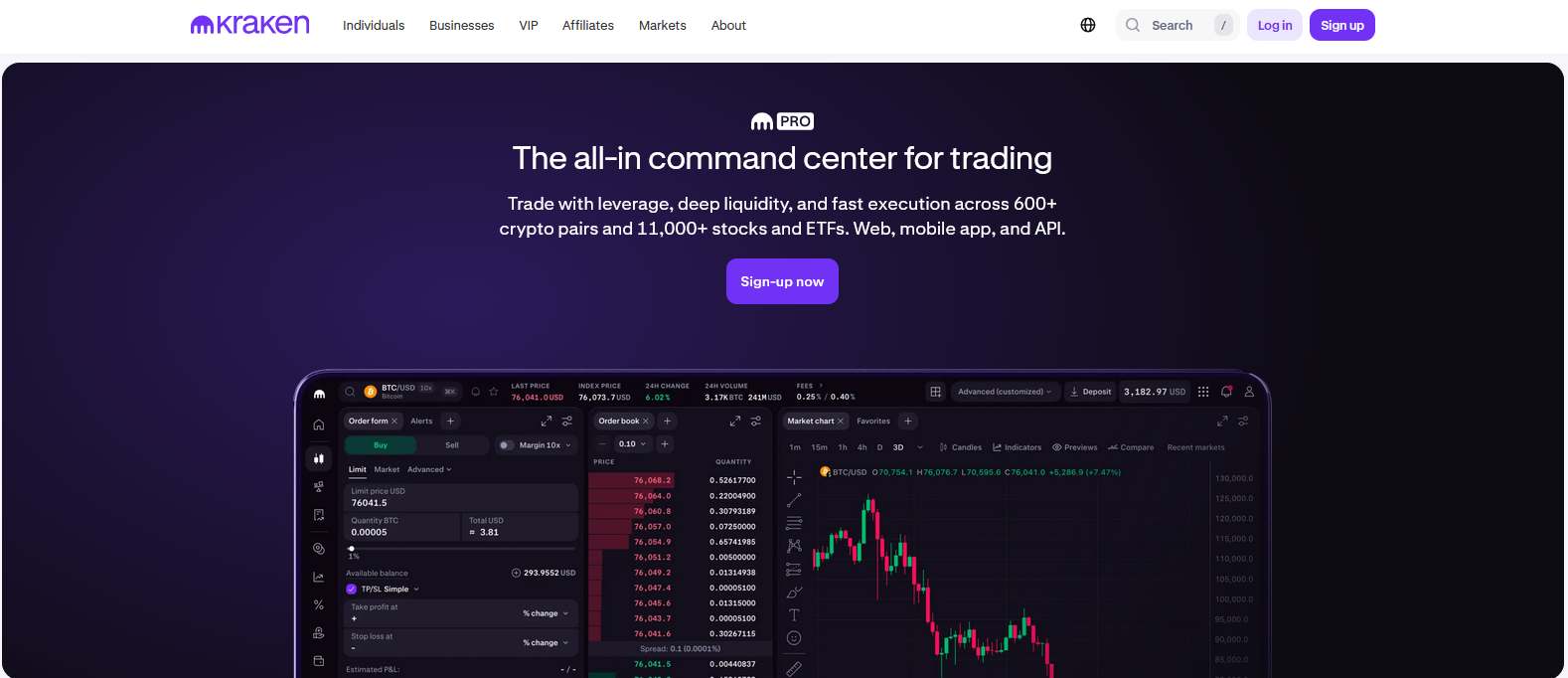
It is important to note that serious trading on Kraken happens on Kraken Pro, which is the dedicated trading platform.
Fees
The spot trading fees on Kraken are relatively high with around 0.25% maker and 0.4% taker fees, so we generally recommend focusing on the futures market for active trading. On the futures market, Kraken charges 0.02% maker and 0.05% taker fees, which is in line with other Tier 1 exchanges.
Based on your monthly trading volume, you can reduce your fees further. With around $100,000+ monthly volume, fees drop to approximately 0.015% maker and 0.04% taker, which is relatively easy to achieve compared to other platforms.
At the highest VIP levels, fees can go as low as 0% maker and 0.01% taker, although this requires very high trading volume.
Leverage
Kraken offers up to 50x leverage on futures trading, which is lower compared to some competitors but still sufficient for most day trading strategies.
Volume, Spread, and Liquidity
Kraken records around $2 billion in daily trading volume, which places it below some of the larger exchanges in this list.
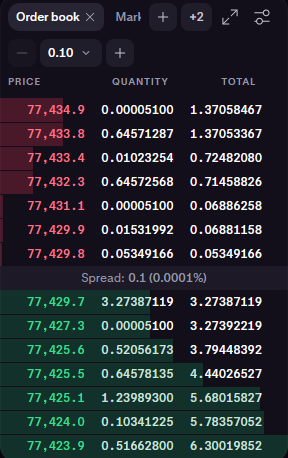
The platform has a CoinGecko liquidity score of around 3.5, but the average bid-ask spread is relatively high at around 1.051%, especially on less liquid pairs.
On the spot market, the spread on the BTC/USDT pair is around 10 cents, which is higher compared to some other Tier 1 exchanges.
Supported Coins
Kraken has expanded its listings significantly. On the spot market, you can now trade around 717+ cryptocurrencies, while on the futures market, the platform offers over 337+ perpetual contracts.
This makes Kraken more versatile than before, although its focus still remains on major and well-established assets.
Trading Interface
The interface of Kraken is known for its simplicity and ease of use, making it a strong option for beginners. At the same time, Kraken Pro offers a more advanced and customizable trading environment. Traders can adjust layouts, manage widgets, and monitor multiple data points within the same trading window.
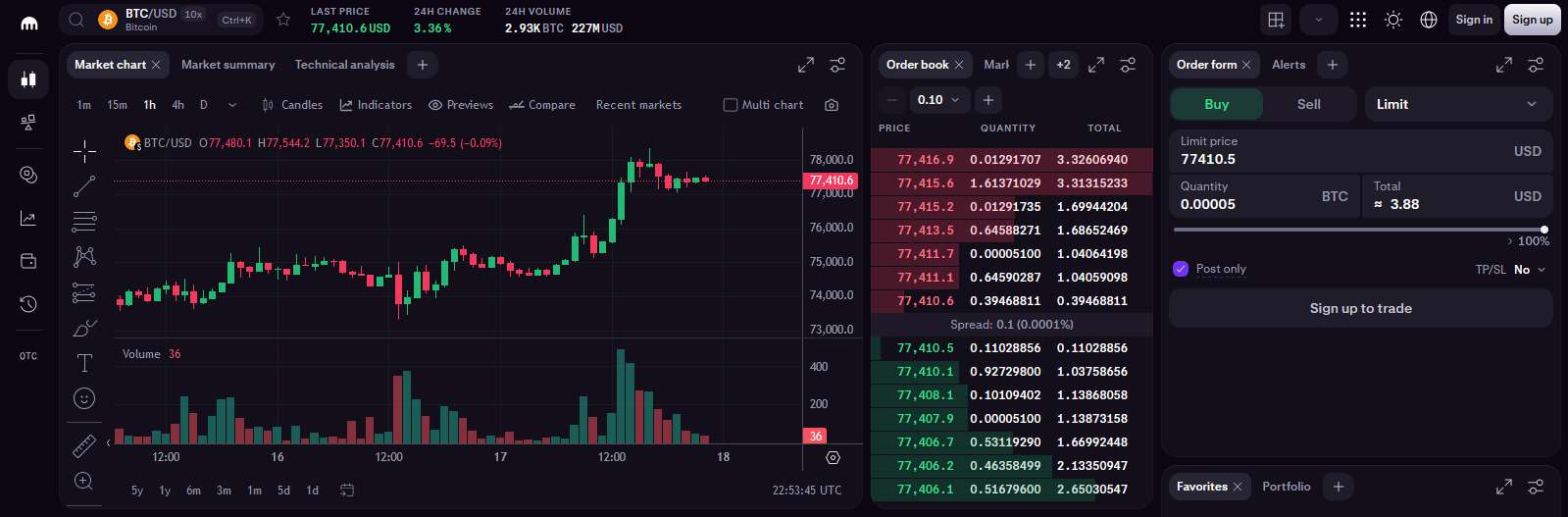
This combination makes Kraken suitable for both new users and more advanced traders who want more control over their trading setup.
Order Types
Kraken supports a solid range of order types, although it is not as advanced as some other exchanges in this list.
- Long/Short
- Limit and Market orders
- Stop Loss
- Stop Loss Limit
- Take Profit
- Take Profit Limit
- Trailing Stop
- Trailing Stop Limit
- Iceberg Orders
8. Phemex
Phemex is a top-tier exchange, especially for users from the US. With a growing user base of over 5 million users, and a large portion of its traffic coming from the United States, it is clear that the platform has built a strong presence in that region.
Launched in 2019, Phemex has become a well-respected player in the crypto space. While it is not the biggest exchange, it still ranks among the best crypto exchanges for day trading for users looking for a simple and stable trading environment.
Fees
The spot market fees on Phemex are 0.1% for makers and takers, which is standard across most exchanges. On the futures market, fees start at 0.01% maker and 0.06% taker. While this is slightly higher than some competitors, it is still a fair rate for active traders.

Phemex also offers fee discounts through its PT token, with up to 20% reduction on spot trading fees and 10% on futures fees, which can help reduce overall trading costs.
Leverage
On the futures market, you can scale your leverage up to 100x for both long and short positions. Of course, you can also use hedge mode, as well as choose cross or isolated margin mode. We are just missing a unified margin account, but other than that you have all the tools you require.
Volume, Spread, Liquidity
Phemex has a total daily trading volume of around $2 billion, placing it lower compared to other exchanges in this list.
The platform has moderate liquidity, with a CoinGecko liquidity score of around 2.5. However, the order book is still fairly stable on major and newer pairs, with an average bid-ask spread of around 0.578%.
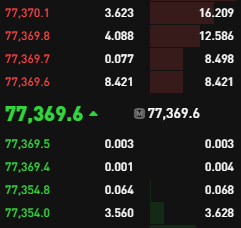
In terms of spreads, Phemex performs well on futures markets, where the spread on BTC pairs typically ranges between 10–20 cents.
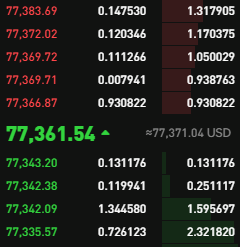
On the spot market, spreads can be wider, especially during volatile conditions, with variations going up to around 50 cents.
Supported Coins
Phemex has expanded its listings significantly. On the spot market, you can now trade around 475 cryptocurrencies, while on the futures market, the platform offers over 550 contracts.
In addition to crypto, Phemex also offers access to stocks, commodities, and forex trading, making it one of the more versatile crypto platforms for day trading.
Trading Interface
Phemex has designed a unique and well-working interface that matches its overall branding. It is very easy to navigate and remains one of the more user-friendly interfaces that we came across.
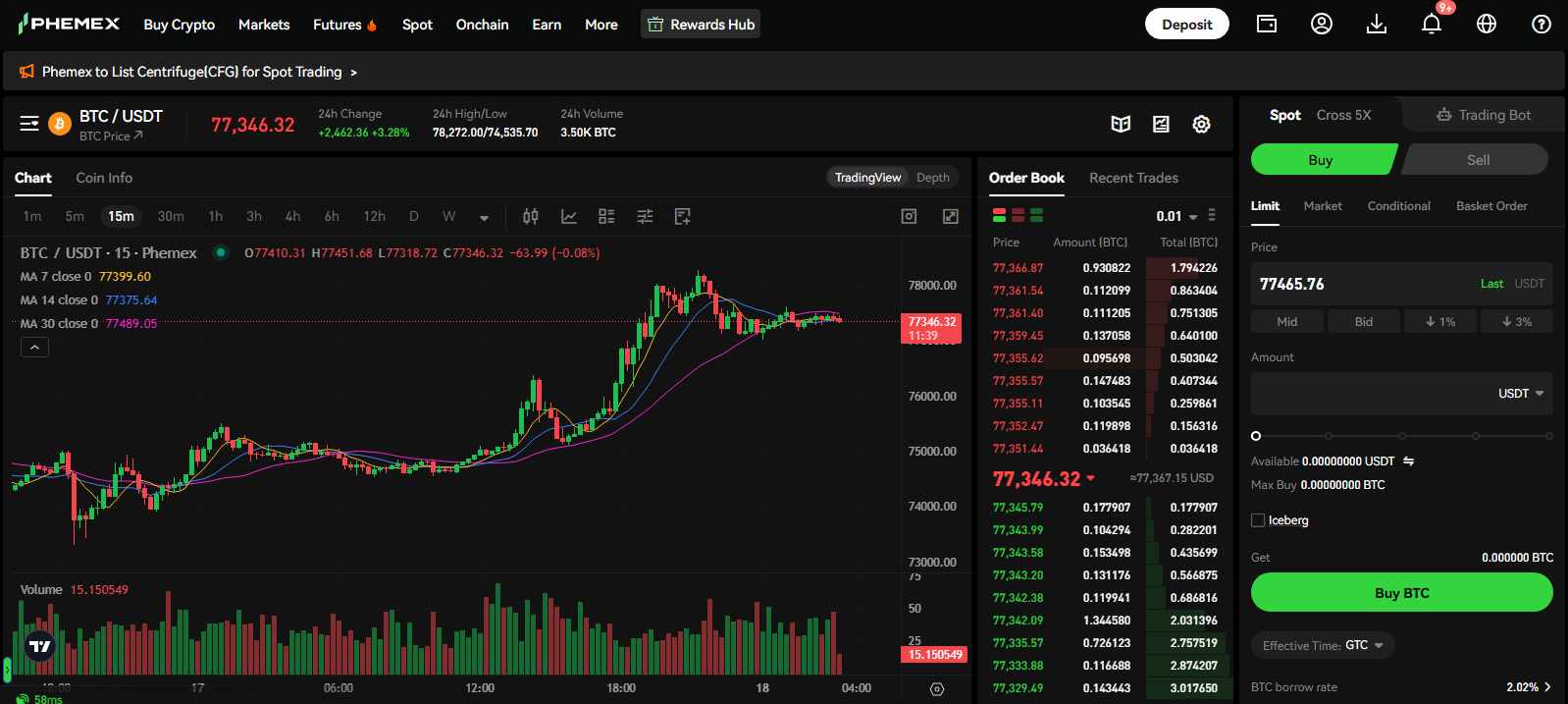
The platform is also quite interactive, with stable performance and no noticeable lags during testing. Order execution felt smooth, which is important for active trading.
The mobile app unfortunately is a little slower compared to the competition, especially during high activity periods.
Order Types
Phemex supports a wide range of order types suitable for both basic and advanced trading strategies.
- Long/Short
- Limit and Market orders
- Conditional orders
- Limit Conditional
- Market Conditional
- Trailing Stop
- Iceberg Orders
- TP/SL
- OCO
- Scaled Order
- Basket Order
- Conditional: FOK, IOC, GTC, Post-only
9. KuCoin
Last, but not least we have KuCoin (for a very specific reason). KuCoin is by far one of the best exchanges for trading low market-cap altcoins, making it a strong option for traders looking for early opportunities in newer projects.
With close to 880+ spot assets and over 591+ perpetual contracts, KuCoin has built a reputation as the go-to platform for finding smaller and newly listed tokens. This is one of the main reasons why many traders consider it the best exchange for crypto day trading when focusing on altcoins.
Fees
The spot market fees on KuCoin start at 0.1% maker and taker fees, which is standard across most exchanges.
If you hold the native KuCoin token (KCS), you get an instant 20% fee discount, reducing your spot fees to around 0.08%, which is a solid rate for active trading.

On the futures market, KuCoin follows the industry standard with 0.02% maker and 0.06% taker fees.
Based on your monthly trading volume, you can reduce your futures fees further. At higher VIP levels, fees can drop to -0.015% maker and 0.03% taker. While the maker rebate sounds attractive, most day traders rely on market orders, so the taker fee matters more in practice.
Leverage
On the futures market, KuCoin supports up to 125x leverage, which is in line with most major exchanges.
Volume, Spread, and Liquidity
KuCoin has grown significantly over the past few years and now records over $5 billion in daily trading volume. The average bid-ask spread is around 0.633%, which is higher compared to some Tier 1 exchanges.
On major pairs like BTC/USDT, the spread is around 10 cents on both spot and futures markets.
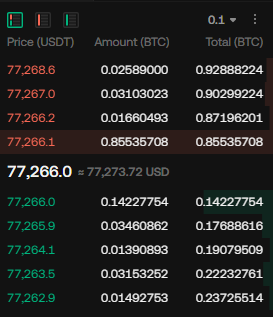
Despite the higher spread on average, the liquidity on KuCoin is stronger than expected, especially on popular trading pairs.
Supported Coins
KuCoin is known for its extensive listings and is often considered the best platform to trade “low-cap gems” and newly launched tokens. With 880+ spot assets and 591+ futures contracts, the exchange offers one of the largest selections of cryptocurrencies in the market.
Trading Interface
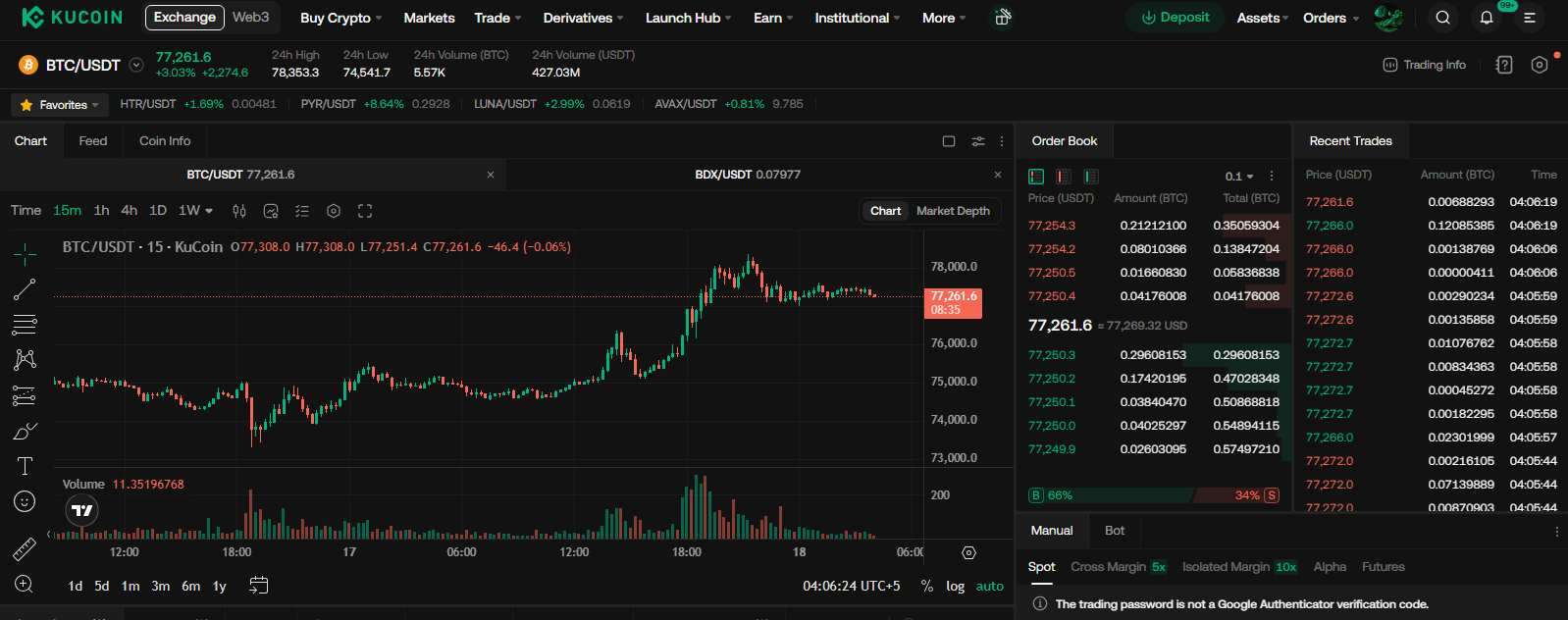
One key critique point about KuCoin is the trading interface. While the platform has improved its overall branding and design in recent years, the interface can still feel slower compared to competitors.
The platform has moved from a more basic design to a more modern look, which now better reflects its trading volume and user base. However, performance can still lag during high activity.
Another downside is that you must enter a trading password every time you access the order dashboard, which can slow down execution for active traders.
Order Types
KuCoin supports a solid range of order types, including several advanced options.
- Long/Short
- Limit and Market orders
- Advanced Limit
- Stop Limit
- Stop Market
- OCO
- Trailing Stop
- TWAP
- TP/SL
- BBO
- Hidden Orders
- Conditional: IOC, FOK, Post-only
Key Factors for the Best Day Trading Exchanges
Choosing the best crypto exchange for day trading is not just about picking the biggest platform. It comes down to understanding the key factors that directly impact your execution, costs, and overall profitability.
Before selecting between different crypto day trading exchanges, it is important to look at what actually matters in real trading conditions.
Trading Fees
Trading fees are one of the biggest factors to consider when choosing an exchange for day trading cryptocurrencies. These fees are applied every time you open and close a trade.
There are two types of fees in crypto trading: maker fees (limit orders) and taker fees (market orders). Over 70% of all orders in the crypto space are market orders.
For day traders, speed matters. You will often rely on market orders to enter and exit positions quickly, which means taker fees will have a direct impact on your overall profitability.
Leverage
When day trading cryptos, you will often rely on small price movements. Even a 1% move can be meaningful when used correctly.
That’s where leverage comes into play. It allows you to amplify your position size and make better use of your capital across multiple trades. However, leverage also increases risk, so it should be used carefully, especially in volatile market conditions.
Liquidity
Liquidity is provided by market makers through limit orders in the order book. Every time a trader places a market order, they consume that liquidity.
Without sufficient liquidity, day trading becomes inefficient. Poor liquidity can cause slippage, meaning your orders will be filled at worse prices than expected. That’s why it is important to use exchanges with strong order books and reliable liquidity providers.
Spread
The spread is the difference between the bid and the ask price. On major pairs like BTC/USDT, the spread is usually around 1 cent on spot markets and around 10 cents on futures markets, which is relatively low on top-tier exchanges. However, spreads can widen during periods of high volatility or on less liquid trading pairs.
Volume
To have a reliable price chart, you need enough market participants on the exchange. If trading volume is too low, price movements can become inconsistent and less reliable. This makes it harder to enter and exit trades at expected levels. Top-tier exchanges process billions of dollars in daily volume, ensuring stable price action and better execution for day traders.
Final Verdict
Day trading cryptocurrencies can be highly profitable, but one key factor many traders underestimate is choosing the right exchange. Comparing fees, liquidity, volume, and execution quality can make a noticeable difference in long-term performance.
Among the best crypto exchanges for day trading, Bybit currently stands out as one of the strongest overall options. It offers competitive fees, strong liquidity, high volume, and a reliable trading interface.
It is also important to understand that scalping and day trading are two different approaches. If you are more focused on quick, high-frequency trades, then our guide on the best crypto exchanges for scalping may be a better fit for you.
FAQs
1. What fees matter most for day traders?
For many day traders, taker fees matter most because market orders are often used for fast entries and exits.
2. Why is liquidity important for crypto day trading?
Higher liquidity can reduce slippage, improve execution, and make it easier to enter or exit positions at expected prices.
3. Is leverage necessary for day trading crypto?
No, but many traders use leverage for capital efficiency. It can increase exposure, though it also increases risk.
4. Can I make $1,000 per day from trading?
How much a trader can make depends on capital, strategy, risk management, and market conditions. Daily profit targets are not fixed outcomes, especially in leveraged markets where results can vary significantly.
5. What is the 3 5 7 rule in trading?
The 3 5 7 rule is a risk framework some traders use, often referring to limits on risk per trade, total exposure, and portfolio concentration. Variations exist, but the idea centers around controlling downside.
6. How much money do I need to make $3,000 a month trading?
There is no fixed capital amount because returns depend on strategy performance, risk taken, and consistency. Profit targets are usually linked more to percentage returns than a specific account size.
7. How much money do day traders with $10,000 accounts make per day on average?
There is no fixed average, but returns depend on strategy, risk, and market conditions. Many traders measure performance in percentages rather than daily dollar targets.